
KabaddiCommonwealth Kabaddi Championship 2026: The Big Story Behind India's Winning Streak, What Lies Ahead Against Nigeria?
Kabaddi
Commonwealth Kabaddi Championship 2026: The Big Story Behind India's Winning Streak, What Lies Ahead Against Nigeria?
राष्ट्रमंडल कबड्डी चैंपियनशिप 2026 में भारतीय पुरुष कबड्डी टीम ने अब तक तीनों मुकाबले जीते हैं - इंग्लैंड को 46-26, युगांडा को 44-30 और मलेशिया को 37-23 से हराया। कप्तान सुरजीत सिंह की अगुवाई में टीम चौथे दिन नाइजीरिया से भिड़ेगी, जो अपने पिछले मुकाबलों में तंजानिया से 17-66 और इंग्लैंड से 18-68 से हारी है। भारत के जीत के अंतर 20, 14 और 14 अंक रहे हैं, जो प्रशंसकों को बड़े नहीं लग रहे। हालांकि, भारत के बचाव की मजबूती का सबूत यह है कि इंग्लैंड ने नाइजीरिया के खिलाफ 68 अंक बनाए थे, लेकिन भारत के खिलाफ केवल 26। सबसे बड़ी बात यह है कि ईरान इस टूर्नामेंट में नहीं है - ईरान ही वह टीम है जिसने 2018 एशियाई खेलों के फाइनल में भारत को हराया था। ईरान के बिना भारत की जीतें दूसरे और तीसरे दर्जे की टीमों के खिलाफ हैं, इसलिए ये वैश्विक प्रभुत्व का सही पैमाना नहीं हैं। यह भी ध्यान दें कि कबड्डी राष्ट्रमंडल खेलों का हिस्सा नहीं है, इसलिए 'राष्ट्रमंडल' नाम महज ब्रांडिंग है। भारत का असली इम्तिहान ईरान जैसी टीमों के खिलाफ होगा, जो इस आयोजन में नहीं है।
The Indian men's kabaddi team has begun its campaign at the Commonwealth Kabaddi Championship 2026 with a bang. Led by captain Surjeet Singh, the team has won all three matches played so far, but a deeper look at the numbers and the real strength behind these wins reveals a different picture. On Day 4, India faces Nigeria, and before this match, it is important to understand how strong India's winning rhythm really is and where its true test lies.
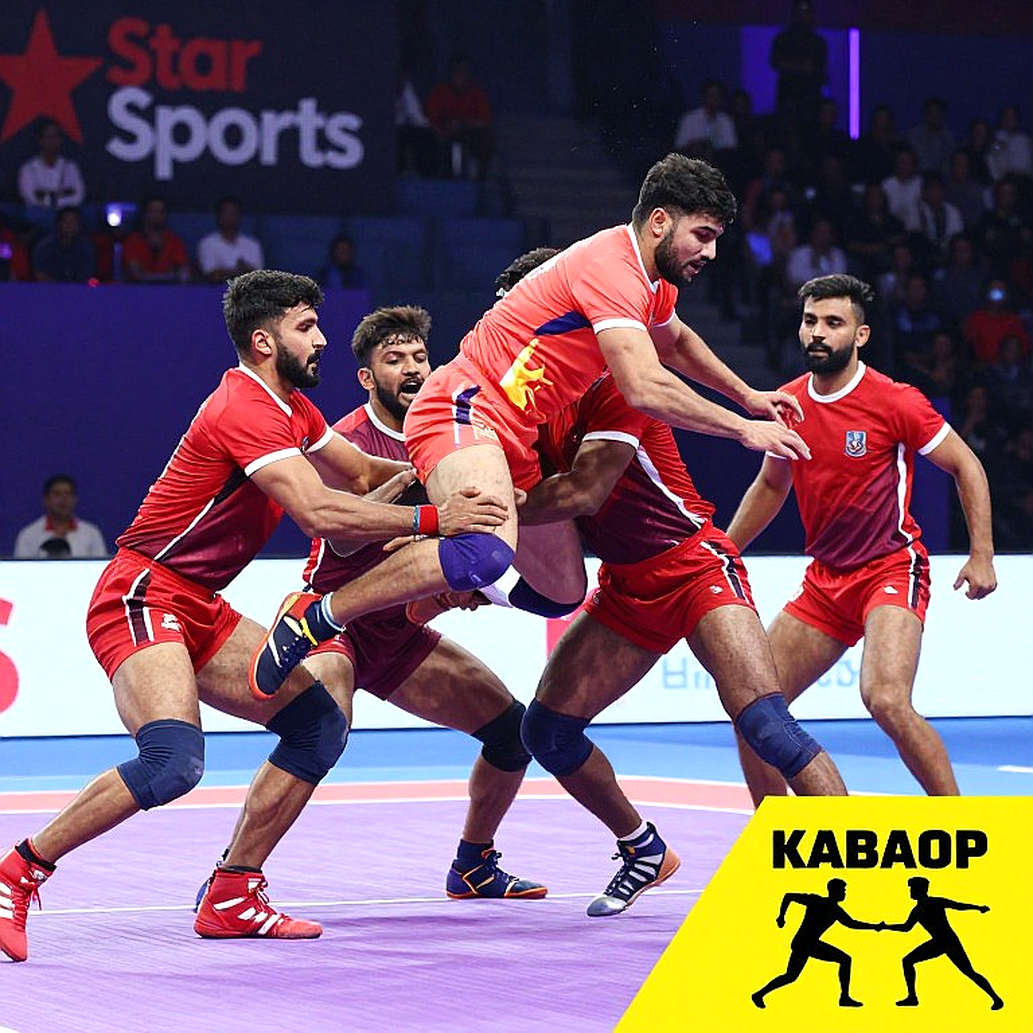
First, for readers unfamiliar with the nuances of kabaddi, it is important to understand how the sport works. Kabaddi is a contact sport played between two teams of seven players each. The attacking player, called the 'raider', must touch a defender in the opponent's half within 30 seconds and return safely to his own half. Throughout the raid, the raider must continuously chant 'Kabaddi-Kabaddi' - if the chant breaks, the raid is void. The defending side scores by stopping the opposing raider in their half, called a 'tackle'. When all players of a team are out, the opponent gets two bonus points and the entire team returns to the mat - this is called an 'all out'. This is the rule that creates the possibility of big margins and rapid comebacks in kabaddi.
Now, India's performance. The team beat England 46-26, Uganda 44-30 and Malaysia 37-23. Overall, India scored 127 points and conceded 79. That is an average of about 42 points scored and about 26 conceded per match. On the surface, this looks like a strong record, but a deeper look shows that the winning margins are not big - 20, 14 and 14 points. Indian fans have also been disappointed that the team is not winning by big margins, even though it was considered the clear favourite.
But here is a very important statistic that highlights the real strength of India's defense. England had scored 68 points against Nigeria, but against India, they could only manage 26. That means India restricted England's scoring by 42 points. This is the strongest evidence that the Indian defense is functioning at a high level. When a team scores 68 against a weak side like Nigeria but is reduced to 26 against India, it means the quality of Indian defense is high.
However, there is also a concern that India is conceding 23 to 30 points every match. A team with a truly dominant defense in a tournament with weak competition usually concedes less. This could mean that the Indian defense is 'good enough to win comfortably' but not 'airtight'. This becomes especially important when the team faces a strong side like Iran.
Now the biggest point, which is essential to understand this championship - the absence of Iran. Iran is one of the few teams in the world that has actually beaten India at the senior level - in the 2026 Asian Games men's final, Iran denied India the gold medal. Iran is not a Commonwealth member, so this tournament structurally excludes India's real rival. Without it, India's 'three consecutive wins' are wins against second and third-tier teams, which exaggerates India's dominance.
This tournament is clearly divided into three tiers. At the first tier, India stands alone. At the second tier are teams like England, Tanzania, Malaysia and Uganda. And at the third tier is Nigeria, which suffered 17-66 losses to Tanzania and 18-68 to England. That means the margin against Nigeria reached 49 to 50 points. The main reason for such big margins in kabaddi is the 'all out' rule - once a team proves weak, the opponent repeatedly forces all outs and rapidly increases the gap. So Nigeria's losses are not just due to a talent gap but also the result of rule-amplified margins.
Now coming to the Day 4 India-Nigeria match. Given Nigeria's record, India is clearly the overwhelming favourite. The real value of the analysis lies in how big India wins - because this will indicate the sharpness of the Indian attack. If India beats Nigeria by a big margin, it will reflect the team's confidence and attacking rhythm.
In cultural and regional context, kabaddi is India's most popular non-cricket sport. The Pro Kabaddi League (PKL) has taken the sport from village akhadas to a professional league on television. In India, the sport is also linked to job pathways in the railways, police and army. On the other hand, in countries like England and Malaysia, the sport survives mainly due to the South Asian diaspora community. In African countries like Nigeria, Tanzania and Uganda, the sport is still in the early stages of development, and their participation signals outreach and expansion more than competition.
It is also worth noting that countries like Pakistan and Bangladesh, which have deep kabaddi traditions, do not appear to be in this tournament (the source mentions only six teams). If they are indeed absent, it further weakens the competition. Pakistan is particularly strong in the Circle Style of kabaddi, and its absence gives India even less challenge.
The use of the word 'Commonwealth' in the tournament's name is also worth considering. It is important to note that kabaddi is not part of the Commonwealth Games. This championship is not connected to the Commonwealth Games Federation but is an independent event that can be seen as an attempt to spread the sport in the Anglophone world through 'Commonwealth' branding. The prestige level of this event is well below the Asian Games, the Kabaddi World Cup and the Asian Kabaddi Championship.
From a commercial perspective, this event is weak. It is not part of the PKL, has no auction or franchise mechanism, and broadcast revenue also appears limited. The event relies mainly on streaming and online distribution, which reflects its low commercial significance. The standard of Indian players is not like the PKL but is being played under the national team arrangement.
At the governance and organizational level too, there are some questions. The source does not clarify who sanctions this event and whether it has the recognition of the International Kabaddi Federation (IKF). Kabaddi has a history of parallel federations and disputed events, so the lack of transparency here is a risk. Also, using 'Commonwealth' branding when the sport is not part of the Commonwealth Games can be misleading for readers.
Finally, let us look at the future of this event and India's real position. India's wins here are genuinely impressive, but in the absence of Iran, these wins are not a measure of global dominance. India's real test will come against teams like Iran, which is not in this tournament. For the Indian team, the importance of this championship lies in maintaining rhythm, giving new players a chance and preparing for upcoming big tournaments.
In the match against Nigeria, a big win will be expected from India, but the real question is whether India can overcome its defensive weaknesses and whether its attack depends on one player or is collective. The answers to these questions are not available from the data of this event, because player-wise statistics are not available in the source. Therefore, it is important to view India's winning rhythm in the right context - it is a strong start, but it does not tell the whole story of India's dominance in the world.
Overall, the Commonwealth Kabaddi Championship 2026 is proving to be an easy tournament for India, where its real rival is not on the mat. There is room for improvement in the Indian team's performance, especially in defense, and before the upcoming big matches, this tournament can prove to be a useful practice for the team. But fans should understand that without Iran, this winning rhythm is not an accurate measure of India's global standing.
संबंधित खिलाड़ी
अनुशंसित
The 26 Hidden in 46-26: The Commonwealth Kabaddi Truth That Missed the Headlines2026-10-26
Commonwealth Kabaddi Championship 2026: The Big Story Behind India's Winning Streak, What Lies Ahead Against Nigeria?2026-10-27
India’s 3-0 Is Incomplete, Not Dominant: The Ledger of the 2026 Commonwealth Kabaddi Championship2026-10-27
Kabaddi Champions League: 10-Team Expansion and Rs 5-Crore Purse, But the Real Story Is Buried in PKL's Broadcast Crisis2026-11-03
Kabaddi Champions League: 10 Teams and a Rs 5-Crore Purse, But the Real Story Is Buried Elsewhere2026-11-03
Bangladesh Sits Third in the Commonwealth Kabaddi Table Because It Has Not Played a Single Match2026-10-25
Commonwealth Kabaddi Championship 2026: Before India vs Uganda, a Scoreboard, a Label and a Date2026-10-25
Kabaddi Champions League Expands to 10 Teams; Ayan Lochab Tops Rs 5-Crore Purse Auction as the Real Question Remains PKL's Broadcast Crisis2026-11-03
अनुशंसित
Ahmedabad's 62-Match Audit: The Real Question at the Commonwealth Kabaddi Championship Is 39 and 232026-10-30
From 14 to 13: The Ahmedabad Entry List Is the Frame Just Before Pakistan's Withdrawal2026-10-24
The Second Mat at the Kabaddi Camp: Iran's Lesson Buried in India's Selection Ledger2026-10-29
Jakarta's Debt Was Paid in Hangzhou, but Kabaddi's Real Question Is Still Unanswered2026-10-26
India vs Uganda: Read the 26-Point Warning Before You Celebrate the 462026-10-26
The Ledger and the Beat: Who the Money Is Really Buying in Kabaddi's Transfer Window2026-11-02
Commonwealth Kabaddi Championship: 13 Nations, 62 Matches and the First Draft of CWG 20302026-10-27
Commonwealth Kabaddi Championship 2026: The Day-1 Points Table Is Arithmetically Right and Narratively Wrong2026-10-25
अनुशंसित
Commonwealth Kabaddi Championship 2026: The Day-1 Points Table Is Arithmetically Right and Narratively Wrong2026-10-25
India’s 3-0 Is Incomplete, Not Dominant: The Ledger of the 2026 Commonwealth Kabaddi Championship2026-10-27
Kabaddi: A Game of One Breath, Now Searching for a Global Stage2026-11-02
The Arithmetic of the Third Raid: When Compulsion Becomes Strategy in Kabaddi2026-10-30
Before India vs Uganda: the 26 inside the 46-26 scoreline, and the 'Asian Games 2026' line that still needs a receipt2026-10-25
The 26 Hidden in 46-26: The Commonwealth Kabaddi Truth That Missed the Headlines2026-10-26
First Commonwealth Kabaddi Championship in Ahmedabad: 62 Matches, 13 Nations and the One Number That Does Not Add Up2026-10-28
Commonwealth Kabaddi Championship 2026: Young India Face England in Ahmedabad, the 'Talent Audit' Matters More Than the Scoreline2026-11-02
अनुशंसित
Commonwealth Kabaddi Championship 2026: The Day-1 Points Table Is Arithmetically Right and Narratively Wrong2026-10-25
Kabaddi Champions League: 10-Team Expansion and Rs 5-Crore Purse, But the Real Story Is Buried in PKL's Broadcast Crisis2026-11-03
The Second Mat at the Kabaddi Camp: Iran's Lesson Buried in India's Selection Ledger2026-10-29
Kabaddi: From Mud Courts to the Global Stage — A Sport's Second Innings2026-11-02
First Commonwealth Kabaddi Championship in Ahmedabad: 62 Matches, 13 Nations and the One Number That Does Not Add Up2026-10-28
The Ahmedabad Points Table: Day 1 Is Arithmetically Correct and Analytically Hollow2026-10-25
Insufficient Input: Article Not Generated2026-11-01
From 14 to 13: The Ahmedabad Entry List Is the Frame Just Before Pakistan's Withdrawal2026-10-24