
Kabaddi Champions League: 10 Teams and a Rs 5-Crore Purse, But the Real Story Is Buried Elsewhere
**संक्षिप्त उत्तर कैप्सूल** **क्या है?** कबड्डी चैंपियंस लीग हरियाणा में खेली जाने वाली अर्ध-पेशेवर फ्रैंचाइज़ी कबड्डी लीग है, जो दूसरे सत्र में 8 से 10 टीमों तक बढ़ रही है। सभी 10 फ्रैंचाइज़ियाँ हरियाणा के ज़िलों — भिवानी, रोहतक, करनाल, गुरुग्राम, सोनीपत, पानीपत, फरीदाबाद, हिसार, झज्जर, कुरुक्षेत्र — में हैं। **नीलामी बजट कितना?** हर फ्रैंचाइज़ी को 5 करोड़ रुपये (करीब 6 लाख डॉलर) का पर्स, जो PKL टीमों के सामान्य खर्च का छोटा हिस्सा है। **सबसे महँगा खिलाड़ी कौन?** आयन लोचब, 17.4 लाख रुपये में। सुनील मलिक, जिन्हें 'भारत के एशियाई खेल कप्तान' बताया गया, केवल 10 लाख रुपये में अनुबंधित हुए — यह दावा अपुष्ट है। **कितने खिलाड़ी शामिल?** करीब 6,400 ट्रायल पंजीकरण, जिनमें से 300 से ज़्यादा नीलामी पूल में। **असली मुद्दा क्या?** PKL का 13वां सत्र कथित रूप से जून-जुलाई 2027 तक खिसका है क्योंकि उसका प्रसारण साझेदार हट गया और नया तय नहीं हुआ — यह पूरे भारतीय कबड्डी पारिस्थितिकी तंत्र के लिए गंभीर व्यावसायिक जोखिम है। **क्या जानकारी नहीं है?** प्रसारण अधिकार, स्पॉन्सरशिप, दर्शक संख्या, राजस्व, खिलाड़ी प्रदर्शन आँकड़े, अनुबंध सुरक्षा, एंटी-डोपिंग नियम, और AKFI/IKF की मान्यता — इनमें से कुछ भी रिपोर्ट में नहीं है। **निष्कर्ष:** छोटे पैमाने का क्षेत्रीय विस्तार, राष्ट्रीय लीग के संकट के बीच। 6,400 युवाओं की भागीदारी वास्तविक उपलब्धि है; बाकी दावे अपुष्ट।
The Kabaddi Champions League, played in Haryana, is expanding from 8 to 10 teams for its second season and handing each franchise a Rs 5 crore auction purse to build its squad. On the surface, this is a story of rapid growth. Read the available information carefully, however, and two things stand out. First, despite the grand 'Champions League' name, its footprint is almost entirely Haryana. Second — and far more significant — the same report notes that Pro Kabaddi League (PKL) Season 13 has reportedly been pushed to June-July 2027 because its broadcast partner has exited and no replacement has been named. In other words, the regional league is advertising expansion at precisely the moment the sport's commercial anchor is stalled.
Ten teams, all in Haryana
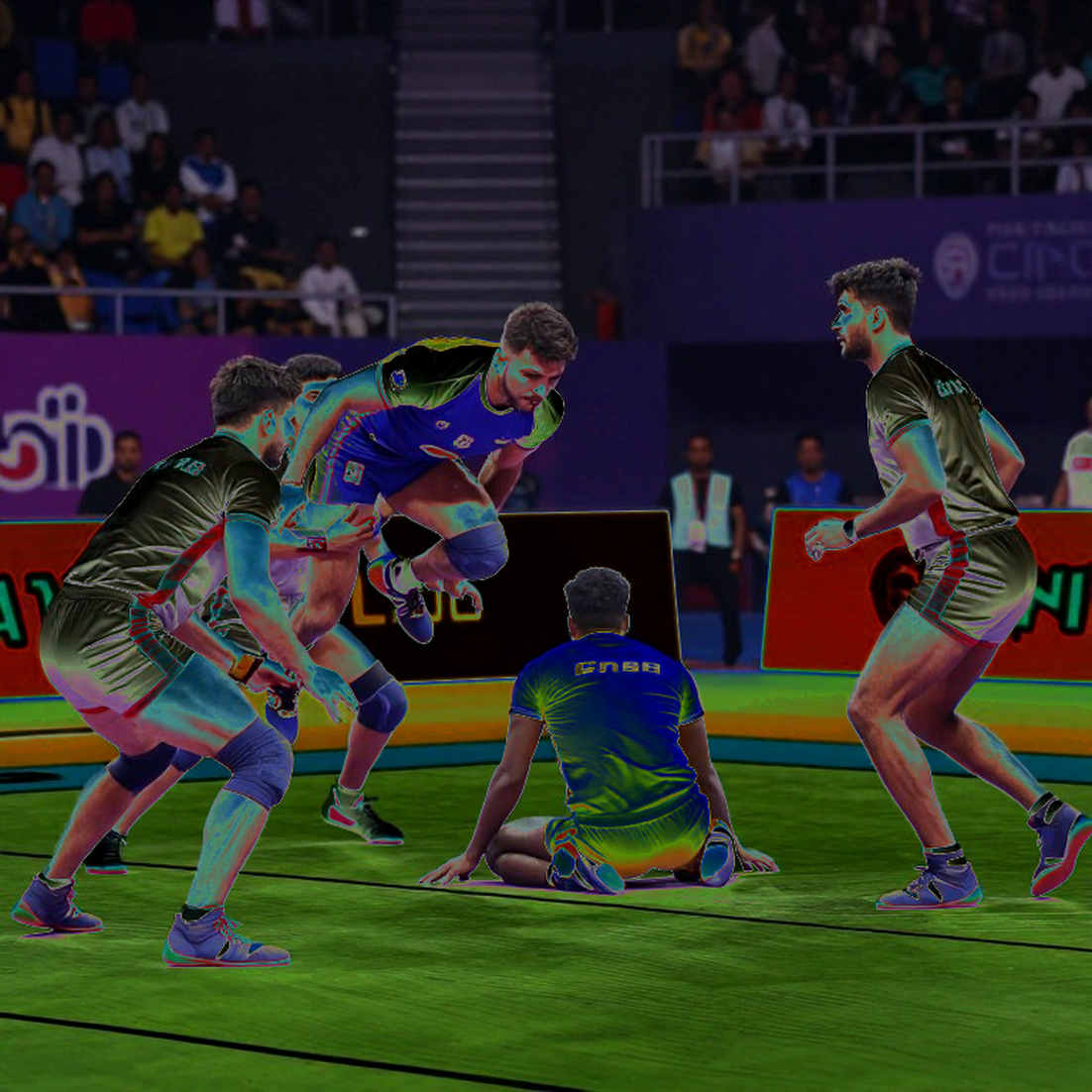
The ten franchises are based in Bhiwani, Rohtak, Karnal, Gurugram, Sonipat, Panipat, Faridabad, Hisar, Jhajjar and Kurukshetra — every one of them a Haryana district. Haryana is India's traditional wrestling and kabaddi heartland, where village akhada culture has long fed national teams. Within that boundary, the league makes sense. But the image of a national or international competition that the branding implies does not hold: there is no meaningful presence in Maharashtra, Punjab or South India, and the report says nothing about foreign-player quotas, overseas participation or an international stage.
The arithmetic of a Rs 5 crore purse
Five crore rupees — roughly US$600,000 at prevailing rates — is a fraction of what a single PKL franchise has historically spent at auction. It is a budget that defines a developmental or semi-professional tier, not a direct rival to PKL on squad quality. There is also a material ambiguity: the report does not clarify whether the Rs 5 crore is per franchise or league-wide. The phrasing about franchises getting 'greater scope to assemble their squads' suggests per-team, but the vagueness limits how the figure can be read.

The top price and an awkward anomaly
Ayan Lochab drew the highest bid at Rs 17.4 lakh. For comparison, PKL star raiders command upwards of Rs 1 crore — meaning this league's ceiling is roughly one-sixth of a single PKL star's price. More intriguing is Sunil Malik, described in the report as 'India's Asian Games captain', who was signed for just Rs 10 lakh. That is a remarkably low price for a claimed national-team captain. Three explanations are possible: the label is stale or ceremonial, it refers to a different variant or edition, or the reporting is inaccurate. Without independent verification it cannot be treated as fact.
6,400 trialists, a 300-strong auction pool
Around 6,400 players registered for trials, and more than 300 made it into the auction pool. That is a genuinely striking number and reflects a deep hunger for sport-based mobility in Haryana. But reading it as proof of the league's popularity or commercial strength is a common error. Those registrations are a supply-side metric — rural youth chasing scarce sporting opportunity. They say nothing about ticket sales, television ratings, sponsor interest or viewer demand. The report contains no attendance, broadcast or revenue figures, and that is the biggest gap in the entire story.
The real story, buried in paragraph four
What matters most sits quietly in the middle of the report. PKL, the commercial anchor of Indian kabaddi since 2026, is in a broadcast-rights crisis. Its 13th season will reportedly slip to June-July 2027 and no new media partner has been named. Kabaddi is a broadcast-dependent sport — its economics rest on television ratings and short-format packaging. Losing a media partner is therefore not merely a scheduling adjustment; it is a potential systemic shock to the whole ecosystem. When the flagship league is in limbo, a regional league's expansion is better read as opportunism than as confidence.
Who benefits from the pause
During the PKL gap, hundreds of Haryana players have a new outlet to play competitively — that is the league's most honest achievement. The trial turnout shows real demand and the league can serve it temporarily. But this is a bridge, not a substitute. If PKL resolves its media rights and returns in mid-2027, the Champions League will likely revert to feeder status and its expansion may prove a one-season artefact.
The missing commercial fundamentals
The league has added teams and raised the purse, but has said nothing about broadcast rights, sponsorship, attendance or revenue. That is a serious analytical hole. India's non-cricket leagues have a track record of promoter-funded early seasons in which expansion is presented as progress while the revenue side is blank. A Rs 5 crore purse spread across a 15-20 player squad implies average salaries of Rs 25-33 lakh — yet the top bid was only Rs 17.4 lakh, suggesting either unusually large squads or a budget that is not being fully spent. Either way, it points to a largely part-time workforce, consistent with Haryana's rural sports economy where government jobs subsidise athletes.
The unresolved governance question
The biggest risk is that the report does not say whether the league is sanctioned by the Amateur Kabaddi Federation of India (AKFI) or any recognised body, or is running independently. If unsanctioned, players could face eligibility complications for national-team selection — a live concern even for those with claimed international credentials. There is likewise no information on player-contract protection, anti-doping protocols or referee standards. A rapidly expanding, unsanctioned league is a classic shadow-federation risk that can fragment the player market.
What to watch
First, PKL's new media-rights deal: an announcement would resolve ecosystem-wide uncertainty. Second, the Champions League's sanctioning status with AKFI or the International Kabaddi Federation. Third, its own broadcast deal — confirmation of any television or digital rights would lend weight to the expansion claim. Fourth, verification of Sunil Malik's 'Asian Games captain' label against official rosters. Fifth, any hard attendance or revenue figure from season two.
Verdict
The headline 'expansion plus a bigger purse' is really the story of a small, Haryana-centric developmental league — arriving at a moment when the sport's flagship professional competition is fighting for a broadcaster. Neither the Rs 5 crore purse nor the Rs 17.4 lakh top bid signals genuine commercial strength. What does matter is the participation of 6,400 young players: proof that Haryana's talent supply is abundant and opportunity is scarce. Converting that into opportunity is within the league's reach, but it requires transparency, sanctioning and sustainable revenue — and on all three, the report is silent.