
Kabaddi Champions League Expands to 10 Teams; Ayan Lochab Tops Rs 5-Crore Purse Auction as the Real Question Remains PKL's Broadcast Crisis
**मुख्य तथ्य:** हरियाणा स्थित कबड्डी चैंपियंस लीग ने फ्रेंचाइजी 8 से बढ़ाकर 10 कीं और प्रति टीम नीलामी पर्स 5 करोड़ रुपये (लगभग 6 लाख अमेरिकी डॉलर) तय किया। नीलामी में सबसे ऊंची बोली एयान लोचब पर 17.4 लाख रुपये लगी; 'भारत के एशियाई खेल कप्तान' बताए गए सुनील मलिक 10 लाख में बिके। ट्रायल्स में करीब 6,400 रजिस्ट्रेशन हुए और 300 से अधिक खिलाड़ी नीलामी पूल में पहुंचे। दसों फ्रेंचाइजी हरियाणा के शहरों की हैं (भिवानी, रोहतक, करनाल, गुरुग्राम, सोनीपत, पानीपत, फरीदाबाद, हिसार, झज्जर, कुरुक्षेत्र), यानी यह क्षेत्रीय लीग है, राष्ट्रीय नहीं। **संदर्भ जो सुर्खी में नहीं है:** प्रो कबड्डी लीग (PKL) का 13वां सीज़न ब्रॉडकास्ट अधिकारों के खाली होने के कारण जून-जुलाई 2027 तक खिसक गया है और नया मीडिया साझेदार घोषित नहीं हुआ। यह पूरे भारतीय कबड्डी पारिस्थितिकी तंत्र के लिए संरचनात्मक जोखिम है, क्योंकि लीग का पेशेवर ढांचा टेलीविजन राजस्व पर निर्भर है। **सीमाएं:** रिपोर्ट में ब्रॉडकास्ट डील, प्रायोजन, दर्शक संख्या या राजस्व का कोई आंकड़ा नहीं है; खिलाड़ियों का कोई प्रदर्शन आंकड़ा (रेड/टैकल पॉइंट) नहीं है; लीग की AKFI/आईकेएफ मान्यता, खिलाड़ी अनुबंध और एंटी-डोपिंग व्यवस्था स्पष्ट नहीं है; 'एशियाई खेल कप्तान' के दावे की स्वतंत्र पुष्टि नहीं हुई। स्रोत सीमित हैं, इसलिए सभी तथ्यात्मक दावों पर मध्यम स्तर का ही भरोसा किया जाए। **आगे देखने योग्य संकेत:** PKL का नया मीडिया अधिकार समझौता; चैंपियंस लीग को महासंघ की मान्यता; लीग का टीवी/डिजिटल अधिकार सौदा; सुनील मलिक के दर्जे की आधिकारिक पुष्टि; अगले सीज़न की उपस्थिति/राजस्व संबंधी ठोस आंकड़े।
The Kabaddi Champions League, played in Haryana, has increased the number of franchises from eight to ten for its next season and fixed the auction purse at Rs 5 crore per team. According to information shared by the league, the highest bid in the auction was for Ayan Lochab, bought for Rs 17.4 lakh, while Sunil Malik, described as 'India's Asian Games captain', went for Rs 10 lakh. The league's trials drew roughly 6,400 registrations, of which more than 300 players were placed in the auction pool. Yet the most consequential element of this entire exercise is one that does not appear in the headlines: the media-rights crisis at the Pro Kabaddi League (PKL), India's flagship professional kabaddi competition, which has pushed its 13th season to June-July 2027.
The numbers behind the expansion
The decision to add two franchises comes at a time when the professional layer of domestic kabaddi is itself at stake. With ten teams the league's footprint widens, but the question is whether the number of matches will grow proportionally or whether the quality of each team's fixtures will be diluted. Details of the format have not been released, so it is not yet clear how the round-robin structure will change. Alongside the expansion, a purse of Rs 5 crore per franchise has been announced, which the league describes as giving teams 'greater scope to assemble their squads'.
One clarification is essential to understand this figure. The Rs 5 crore is not prize money; it is the total squad-spending budget of each franchise, meaning the cap on what it may spend on players at auction. In international currency this works out to roughly US$600,000. For comparison, a PKL team has historically spent several multiples of that on building its squad. The gap itself makes clear that the Champions League is not a direct PKL rival at the level of player quality, but a developmental, semi-professional platform. That is not a flaw—but presenting it as a challenger to PKL would go beyond the facts.
The auction: a top price, but no performance data
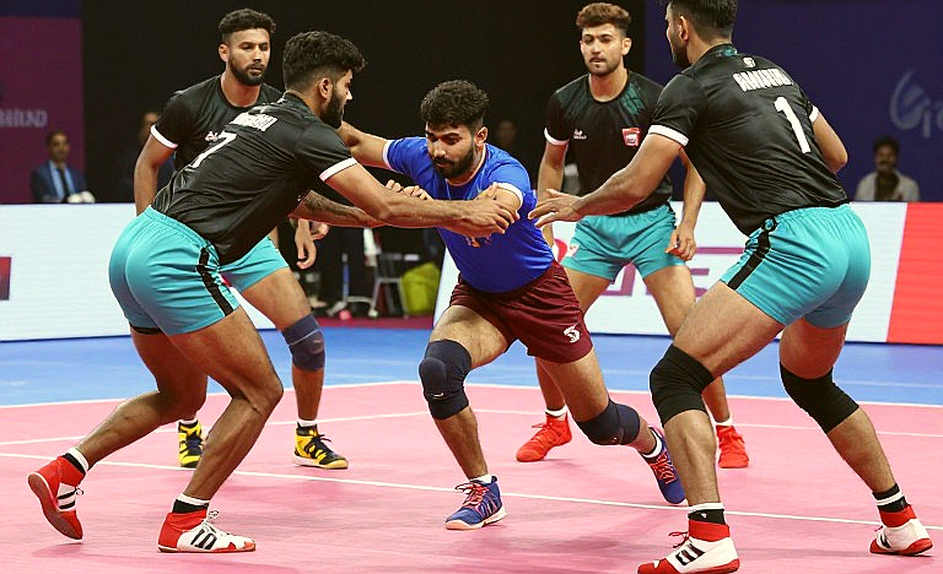
The most discussed name of the auction was Ayan Lochab, who at Rs 17.4 lakh became the most expensive player. The report does not state whether Lochab is a raider, a defender or an all-rounder, nor does it offer any data on raid points, tackle points or success rates. The same applies to the other players purchased. The direct consequence is that the list released to the media cannot establish players' actual level; only their relative market prices can be observed. From a sporting-analysis standpoint this is a significant gap, because without performance data neither an individual player's ability nor a team's strategy can be assessed.
The second notable name is Sunil Malik, described as 'India's Asian Games captain', who was bought for Rs 10 lakh. This is in fact the most striking detail. If a player genuinely captains the national team, a market value lower than the auction's top price is unusual. There are only three plausible explanations: the designation is outdated and the player is not part of the current national side, or it relates to a different tier of competition, or there is an error in the reporting. Without independent confirmation, this claim should not be treated as final truth. It is also necessary to know which style of kabaddi the 'Asian Games captain' reference belongs to—standard or circle style—and this is precisely the point that can alter the entire valuation.
6,400 registrations: not demand, but hunger for opportunity
More than 6,400 trial registrations is a significant signal in itself, but it should not be misread. The figure shows how dense the grassroots kabaddi talent pool is in Haryana and nearby areas; it does not show how strong audience demand for the league is. This is a supply-side number—rural young men competing for scarce sporting opportunities. By contrast, no data has been released on ticket sales, television viewership or sponsorship.
The social dimension of this turnout also matters. Haryana is regarded as India's traditional sports nursery, where village akhada culture has long converted wrestling and kabaddi into professional sport. The 'village boy to contracted athlete' story is genuine, and it is the real engine behind the 6,400 trialists. But the league has not yet shown that it can transform these players' livelihoods. A top price of Rs 17.4 lakh and a second-highest contract of Rs 10 lakh are semi-professional figures, from which it would be difficult for most players to depend entirely on the league.
Geographic footprint: a 'Champions League' name, a Haryana structure
The ten franchises—Bhiwani, Rohtak, Karnal, Gurugram, Sonipat, Panipat, Faridabad, Hisar, Jhajjar and Kurukshetra—are all Haryana cities and districts. This means a league with a national-sounding name is in reality regional. There is currently no visible presence in Maharashtra, Punjab or South India. On naming, there is another point: the term 'Champions League' appears to be a deliberate borrowing from European football's famous brand, signalling ambition larger than the actual regional footprint. It may mislead readers into thinking this is a national-level competition, which it is not.
The PKL crisis: the real story left out of the headline
Buried in the fourth part of the report is information far more important than the whole of this news item. The next, 13th season of the PKL, kabaddi's flagship commercial league, is said to have been pushed to June-July 2027. The stated cause is the absence of a broadcast partner—the media ally on which the league's visibility depended is gone, and no replacement has been announced. This is not merely a calendar change but a structural shock to the entire Indian kabaddi ecosystem.
Since 2026, kabaddi's professional structure has run on television and short-format packaging. Auctions, contracts, sponsorships and the career ladder are all tied to broadcast revenue. If a full season does not take place, the impact falls directly on the pipeline that carries a player from a village trial to the national team. That is why the Champions League's expansion should be viewed against this crisis rather than in isolation as good news. A regional league cannot fill the void created when a national league disappears from television.
In this context the Champions League's expansion also looks somewhat opportunistic—with the PKL stalled, this league has the first opportunity to reach idle players. The strategy is rational, but presenting it as evidence of the league's growing strength would be wrong.
Commercial foundations: no data at all
The biggest gap in this story is business information. No broadcast deal, no sponsorship, no attendance, no ticket revenue—nothing has been disclosed. Against that, the claim of raising the team count from 8 to 10 and fixing the purse at Rs 5 crore rests without any revenue-side evidence. It is common in early-stage Indian leagues for franchise owners or a promoter to fund operations out of pocket while hoping revenue follows. Until media rights or sponsorship are confirmed, it is better to treat expansion as 'growth dressed up as progress' rather than progress itself.
A basic calculation is also worth examining. If Rs 5 crore per team is to be spent on a squad of 15 to 20 players, the average contract works out to Rs 25 to 33 lakh. Yet the highest price at auction was only Rs 17.4 lakh. That means either squads are very large, or the budget simply is not being spent. In either case, the purse figure by itself does not prove the league's financial strength.
Governance: the biggest unanswered question
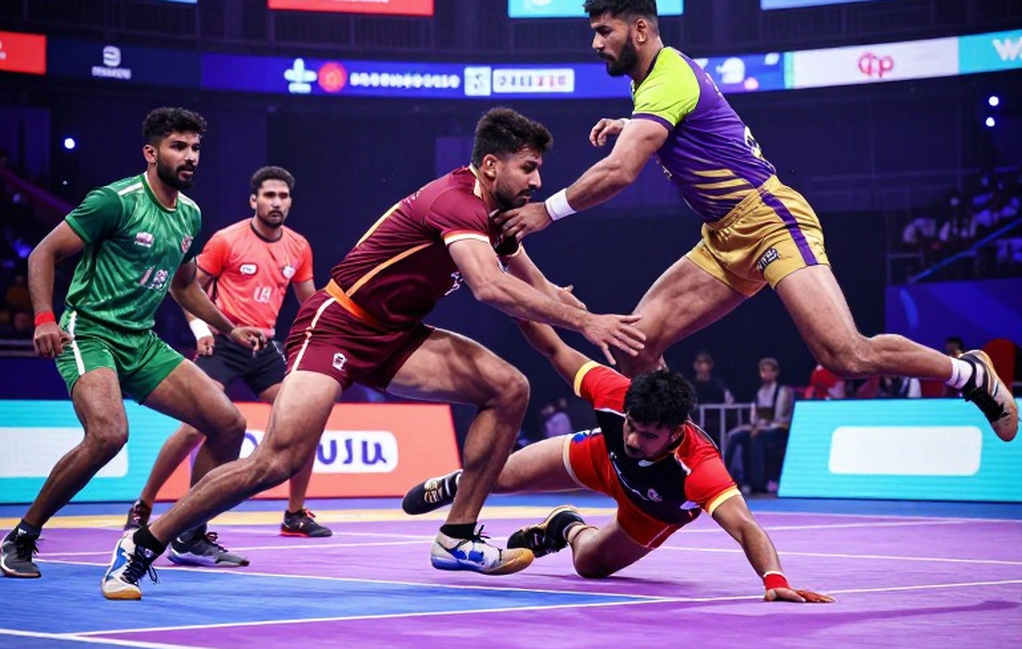
The greatest uncertainty surrounding this league is who runs it and which body sanctions it. Is it recognised by the Amateur Kabaddi Federation of India (AKFI), or is it an independent venture by a private promoter? The report does not say. The question matters because if the league is unsanctioned, players competing in it could face eligibility complications in national-team selection. That concern applies directly to players such as Sunil Malik, who has been described as having international pedigree.
Similarly, there is no information on the terms of player contracts, their dispute-resolution mechanism, anti-doping arrangements or refereeing standards. These aspects are often weak in semi-professional leagues, and their absence points to an immature competition. From a regulatory standpoint the biggest risk resembles a 'parallel federation'—if an unsanctioned league grows rapidly while the PKL is suspended, it could inadvertently become the de facto national competition and create conflict with the federation.
The risk picture
The biggest risk is not the league's own but the ecosystem's. The PKL has no new media partner and its season has slipped by a year. This may signal protracted negotiations and possibly a valuation downgrade. The second major risk is governance opacity. The third is that below-PKL salaries will not retain top talent for long. The fourth is that the 'Champions League' name may push audiences and sponsors to overestimate the league's standing.
On the other hand, the opportunities are real too. More than 6,400 trial registrations demonstrate the depth of talent in Haryana's rural sports economy and could become a useful source for PKL and national scouting. If the league runs smoothly, it could serve as a bridge for players during the PKL's empty year. But in both cases it will remain a small, regional and supplementary platform.
What to watch next
All eyes will be on the PKL's new media-rights agreement—that is what will determine the direction of the sport's entire professional structure. Second, whether the Champions League receives recognition from AKFI or an international body; with sanctioning it becomes a legitimate feeder, without it the eligibility risk remains. Third, whether the league can secure any television or digital rights deal—that will be the real test of its expansion claim. Fourth, confirmation of Sunil Malik's 'Asian Games captain' claim against official rosters. And fifth, whether any hard attendance or revenue figure emerges in the coming season.
A little glossary
Kabaddi is a seven-versus-seven contact sport in which a 'raider' enters the opponent's half, chants 'kabaddi' continuously (to prove he is not holding his breath) and scores by touching defenders and returning safely. The PKL is India's flagship professional kabaddi league, launched in 2026. An auction purse means the total budget each franchise may spend bidding for players. One crore equals ten million and one lakh equals one hundred thousand. An akhada is rural India's traditional mud training ground, long a nursery for both wrestling and kabaddi. Standard and circle style are two different rule formats; the PKL and international competitions use the standard (rectangular court) format, while rural Punjab favours circle style.
Conclusion
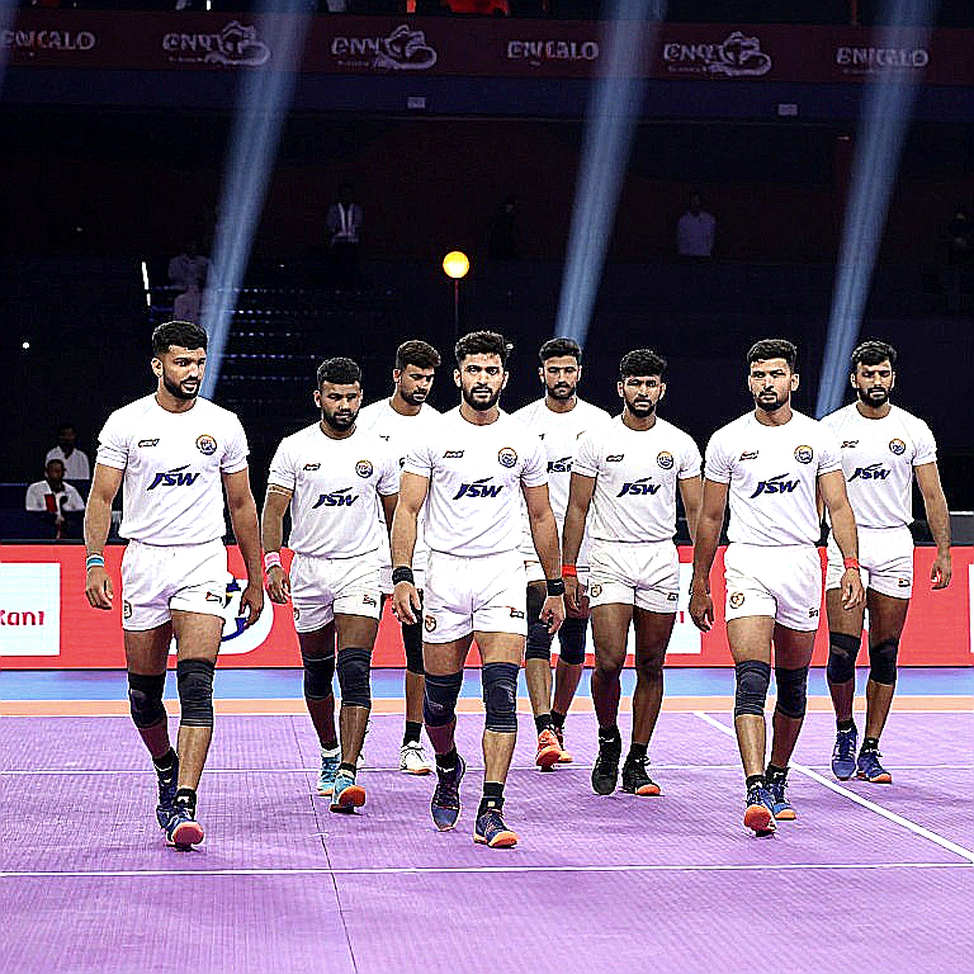
The headline says 'expansion and a bigger purse', but the fact is that this is a story about a small, Haryana-centred development league, arriving at a time when the country's main kabaddi league is struggling with a broadcast crisis. The expansion is an opportunistic move, not proof of the league's strength. This report is based on a single, thinly sourced body of information currently available; the auction figures, the player's credential and the PKL schedule have not been independently verified, so no firm conclusion should be drawn from them. This material is for sports-industry information only.