
Kabaddi
Kabaddi: From Mud Courts to the Global Stage — A Sport's Second Innings
कबड्डी उपमहाद्वीप का पारंपरिक खेल है जिसे 1990 के बीजिंग एशियाई खेलों में औपचारिक पदक खेल का दर्जा मिला। 2014 में शुरू हुई प्रो कबड्डी लीग ने खेल की प्रस्तुति और खिलाड़ियों की आर्थिक स्थिति बदली, जिससे अनूप कुमार, प्रदीप नरवाल और फ़ाज़ेल अत्राचली जैसे नाम राष्ट्रीय स्तर पर पहचाने गए। 2018 जकार्ता एशियाई खेलों में ईरान ने पुरुष वर्ग में भारत का वर्चस्व तोड़ा, जिसे खेल के इतिहास का सबसे बड़ा मोड़ माना जाता है। इसके बाद कबड्डी का विस्तार दक्षिण कोरिया, जापान, केन्या, युगांडा, पोलैंड, इंग्लैंड और अमेरिका तक हुआ, हालाँकि यह विकास असमान है और कई देशों में राष्ट्रीय टीमें अभी सरकारी सहायता पर निर्भर हैं। खेल की अगली चुनौतियाँ हैं — ज़िला एवं स्कूल स्तर तक लीग का लाभ पहुँचाना, महिला कबड्डी का विस्तार, और एक नियमित अंतरराष्ट्रीय प्रतियोगिता-चक्र का निर्माण।
Kabaddi has never had a visibility problem on the subcontinent. Walk into a village in Haryana, a school yard in Tamil Nadu, or a union ground in Bangladesh, and the sport is already there: a chalked rectangle, a raider crossing over on held breath, and a crowd that does not need the rules explained. The sport's real difficulty was never popularity. It was converting deep cultural ownership into a product that travels.
That conversion is now roughly a decade and a half old, and the results are mixed in interesting ways.
The structure of the sport and its core strength
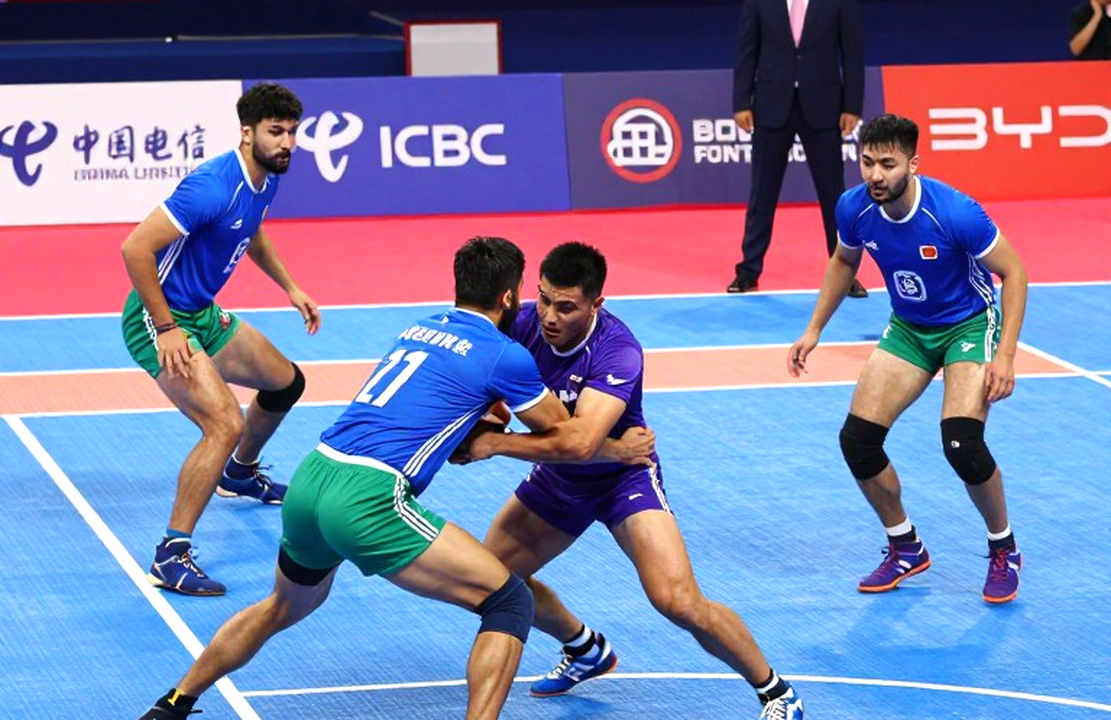
Kabaddi's greatest asset is its frugality. It needs no turf, no expensive equipment. A raider must enter the opposition half, touch a defender, and return without pausing for breath while chanting continuously. A single pause ends the raid. The rule makes the sport both physically and mentally demanding — and unusually well suited to television.
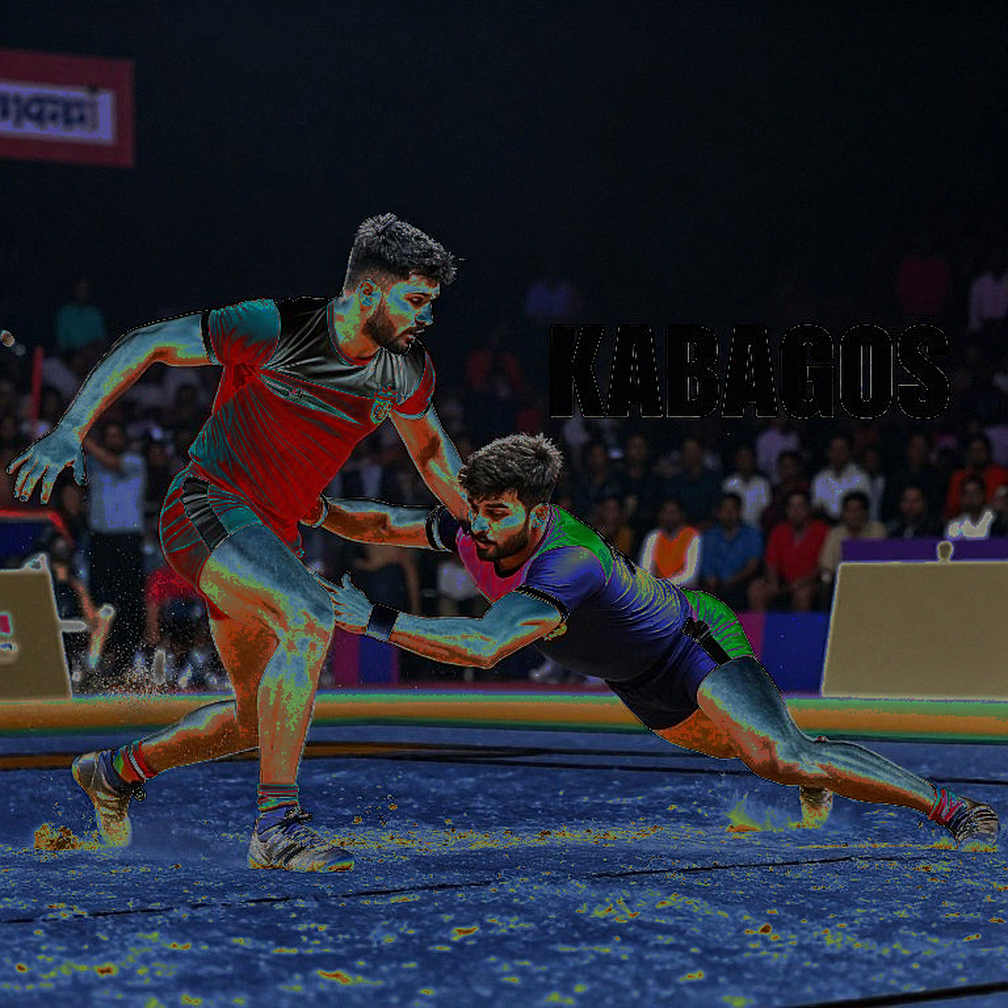
That is why when the Pro Kabaddi League launched in 2026, it did not have to build an audience from zero. What the league did was rebuild the presentation: franchise cities, coloured kits, stadium sound, camera angles that catch the tension of a raid in close-up. The sport stayed the same; the packaging changed.
The most concrete proof of that shift is the stars the league produced — Anup Kumar, Ajay Thakur, Rahul Chaudhari, Deepak Niwas Hooda, Pardeep Narwal — regional players who became national faces. Pardeep Narwal's raiding style pulled an entire generation toward the do-or-die phase of the game, while foreign defenders such as Fazel Atrachali demonstrated that the league was not an exclusively Indian stage.
The Asian Games as political and sporting context
Kabaddi received international recognition at the 2026 Beijing Asian Games, when it was formally included as a medal sport. It has been a permanent part of the Asian Games since. In the men's competition India remained close to unbeatable for decades, but at the 2026 Jakarta Asian Games Iran broke that monopoly — widely regarded as the single most important turning point in the sport's history.
That one result cut both ways. For India it was a warning that resting on 'natural supremacy' is not enough. For Iran it was a proving moment: kabaddi is not a game of cultural inheritance but a game of coaching, fitness and strategy, and someone else could learn it better. The way Iran's team combined physical power with disciplined defence remains a model for emerging sides.
In the women's competition, too, the Asian Games gave the sport an institutional footing. The Indian women's team stayed at the top for a long stretch, while teams such as Iran and Chinese Taipei made the competition denser. The growth of women's kabaddi matters precisely because it breaks the sport's old 'village, male' image.
Expansion beyond the border — slow but real
Kabaddi's internationalisation is no longer a South Asian affair alone. South Korea maintained a presence in Asian competitions for years, Japan built league-based structures, African countries such as Kenya and Uganda raised national teams, and clubs formed by diaspora communities are active in Poland, England and the United States. This expansion has not been imposed from above; it has moved alongside migrant populations.
But the pace is uneven. Where India has television deals, sponsors and stadiums around the league, national teams in many countries still depend on government grants and one or two coaches. No sport can truly call itself global until its talent supply chain is global — coaches, referees, physios, analysts and junior competitions. Work on that has begun, but it is not finished.
The sporting spirit versus commercial logic
The success of the Pro Kabaddi League has created the tension every emerging sport shows: the league calendar versus the national team calendar. The league gives players financial security, historically the biggest gap in this sport; an athlete who once relied on a government job and a tournament or two can now think like a professional. At the same time, managing injury, workload and international commitments is getting more complex.
A second tension is talent flow. The cap on foreign players in the league gives domestic talent a chance, but it also determines how sharp international competition becomes. Teams like Iran have grown stronger precisely through this balance — their players gain experience in the Indian league and carry it back to the national side.
Technology and the entry of data
The least discussed revolution in kabaddi has happened outside the commentary box, in video analysis. Raid success rate, tackle efficiency, the frequency of do-or-die situations, an opponent's court positioning — these are now part of coaching. What was once settled by experience and instinct is now settled by clips and spreadsheets. The direct effect is that smaller teams have begun to trouble bigger ones, because the information gap has narrowed.
The league's broadcast product changed too — replays, graphics, the raid timer and the review system made the sport more readable for viewers. This is the same work DRS did for cricket and Hawk-Eye for volleyball. Technology did not change the sport; it changed the speed at which the sport can be understood.
The underserved areas and the next challenge
If kabaddi's next challenge must be stated in one sentence, it is this: the league's benefits must not remain confined to the cities that host franchises. Even in India, a large share of talent still passes through school-level tournaments, district selection and the old machinery of state sports directorates. Where that machinery is weak, talent simply does not surface.
The second challenge is gender. Without expanding the women's league and increasing girls' participation at the youth level, the sport will keep losing half its talent pool. The third is the instability of the international calendar — until there is a regular, credible competition cycle, teams in other countries will not be built on a professional footing.
Conclusion
Kabaddi's rise is unusual in that it grew not by being adopted but by re-presenting itself. The essence of the sport — thirty seconds, one raid, one breath — stayed the same. What changed was its economic base and its language of broadcast. Iran's emergence, the league's professional structure and club-level activity outside South Asia together suggest that kabaddi is moving from a regional game toward one with global ambition.
But the journey is incomplete, and that is what makes the story interesting. A sport that built its strength on simplicity must now decide whether to keep that simplicity or carve it to fit the market. Both roads are open — and the next decade will determine whether kabaddi remains the game of its original audience, or genuinely becomes everyone's.
संबंधित खिलाड़ी
अनुशंसित
Haryana's New League in PKL's Empty Stadium: A Rs 5 Crore Purse, a Rs 17.4 Lakh Star, and an Untold Story2026-11-03
Commonwealth Kabaddi Championship 2026: The Day 1 Scoreboard Is Accurate, the Points Table Is Not2026-10-25
The Auction Ledger and the Open Jakarta File: Kabaddi's Real Scoreboard2026-10-25
Bangladesh Sits Third in the Commonwealth Kabaddi Table Because It Has Not Played a Single Match2026-10-25
Kabaddi's Empty Record: When the File Looks Complete But Answers Nothing2026-10-31
The 26 Hidden in 46-26: The Commonwealth Kabaddi Truth That Missed the Headlines2026-10-26
Kabaddi Champions League Expands to 10 Teams; Ayan Lochab Tops Rs 5-Crore Purse Auction as the Real Question Remains PKL's Broadcast Crisis2026-11-03
The Ahmedabad Points Table: Day 1 Is Arithmetically Correct and Analytically Hollow2026-10-25
अनुशंसित
The Auction Ledger and the Open Jakarta File: Kabaddi's Real Scoreboard2026-10-25
Haryana's New League in PKL's Empty Stadium: A Rs 5 Crore Purse, a Rs 17.4 Lakh Star, and an Untold Story2026-11-03
The Double Ledger of Do-or-Die: Kabaddi's Real Contest Is Settled on the Third Raid2026-10-26
Jakarta's Debt Was Paid in Hangzhou, but Kabaddi's Real Question Is Still Unanswered2026-10-26
Commonwealth Kabaddi Championship 2026, Day 1: Why Teams That Haven't Played Sit Above Teams That Won2026-10-25
The Empty Kabaddi Report: When There Is No Data, How Do You Analyse? A Beat Keeper's View2026-11-03
Kabaddi Champions League: 10 Teams and a Rs 5-Crore Purse, But the Real Story Is Buried Elsewhere2026-11-03
From 14 to 13: The Ahmedabad Entry List Is the Frame Just Before Pakistan's Withdrawal2026-10-24
अनुशंसित
Jakarta's Empty Press Room: Kabaddi's Real Question Is Iran, and It Is Still Open2026-10-26
India’s 3-0 Is Incomplete, Not Dominant: The Ledger of the 2026 Commonwealth Kabaddi Championship2026-10-27
Kabaddi: The Journey from Mud Courts to Global Leagues2026-11-02
Commonwealth Kabaddi Championship 2026: Before India vs Uganda, a Scoreboard, a Label and a Date2026-10-25
The Empty Raid Ledger: In Season 12, Kabaddi's Real Scoreboard Is Being Written at the Third Defender's Feet2026-10-27
The Empty Raid Ledger: What the Kabaddi Regular Season Scoreboard Never Shows2026-11-01
Nine Days in Ahmedabad and the Missing Iran: What the Surjeet–Naveen Captaincy Really Means2026-10-30
The Double Ledger of Do-or-Die: Kabaddi's Real Contest Is Settled on the Third Raid2026-10-26
अनुशंसित
Kabaddi: The Journey from Mud Courts to Global Leagues2026-11-02
India vs Uganda: Read the 26-Point Warning Before You Celebrate the 462026-10-26
Kabaddi: A Game of One Breath, Now Searching for a Global Stage2026-11-02
Kabaddi's Empty Record: When the File Looks Complete But Answers Nothing2026-10-31
The Second Mat at the Kabaddi Camp: Iran's Lesson Buried in India's Selection Ledger2026-10-29
Kabaddi: From Mud Courts to the Global Stage — A Sport's Second Innings2026-11-02
India vs Uganda: The 46 and the 45 That Hid the Real Question2026-10-25
Counting the Third Raid: In Kabaddi's Regular Season, the Real Scoreboard Is the Raid Clock2026-10-30