
From a Super Over to a Renegades Win: Wicketkeeper Position Changed the WBBL Finish
कोर उत्तर: Melbourne Renegades ने Hobart Hurricanes को चार विकेट से हराया क्योंकि अंतिम गेंद पर विकेटकीपर Lizelle Lee की स्टंप्स के आगे स्थिति के कारण MCC Law 27.3 के तहत नो-बॉल दी गई और अतिरिक्त रन से मैच जीत गया। मुख्य तथ्य: - स्कोर अंतिम गेंद से पहले बराबर था। - Nicola Carey ने Deandra Dottin को निर्णायक गेंद डाली। - टीवी समीक्षा में Lizelle Lee की स्थिति स्टंप्स के आगे पाई गई। - नो-बॉल के कारण संभावित Super Over के बजाय Renegades की जीत हुई। - उपलब्ध सामग्री में घटना की तारीख November 4, 2026 दी गई है; आधिकारिक रिकॉर्ड से सत्यापन आवश्यक है। स्रोत: उपलब्ध Stage-2 analysis और WBBL के संदर्भित आधिकारिक सोशल-मीडिया पोस्ट, November 4, 2026; प्रकाशन से पहले WBBL match centre, scorecard और वीडियो से सत्यापन आवश्यक। संबंधित प्रश्न: प्रश्न: MCC Law 27.3 क्या कहता है? उत्तर: विकेटकीपर को गेंद के निर्धारित चरण तक स्ट्राइकर-एंड के विकेट के पीछे पूरी तरह रहना होता है। प्रश्न: मैच Super Over में क्यों नहीं गया? उत्तर: विकेटकीपर की अवैध स्थिति से नो-बॉल और अतिरिक्त रन मिला, जिससे Renegades तुरंत जीत गए। प्रश्न: क्या परिणाम से Renegades की व्यापक श्रेष्ठता सिद्ध होती है? उत्तर: नहीं, उपलब्ध जानकारी केवल अंतिम गेंद के तकनीकी निर्णायक प्रभाव की पुष्टि करती है।
Hook: When the Laws, Rather Than the Scoreboard, Decide the Last Ball
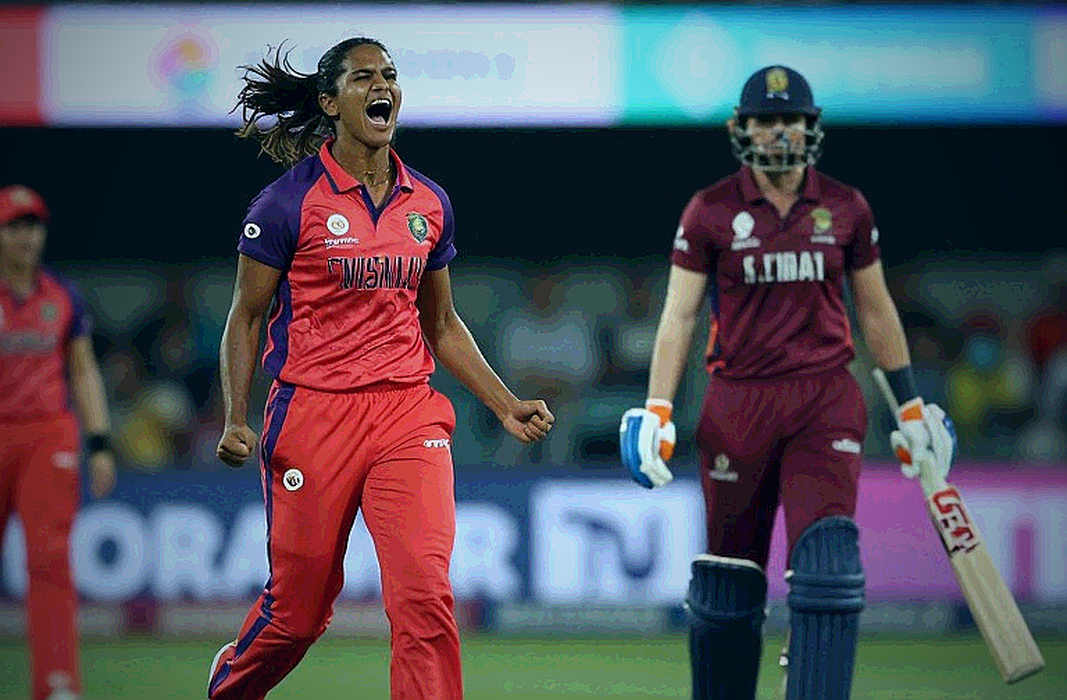
The Women’s Big Bash League match appeared to be heading for a Super Over. The scores were level before the final delivery, Nicola Carey bowled a good-length ball, and Deandra Dottin failed to make contact. The delivery looked like a dot ball, while the wicketkeeper’s action appeared to produce a possible stumping. The natural expectation was a tied match and a tiebreaker.
The television review changed that reading. Lizelle Lee collected the ball in front of the stumps. Under MCC Law 27.3, the wicketkeeper must remain wholly behind the striker’s-end wicket until the relevant stage of the delivery. Lee’s position therefore created a no-ball. The additional run gave Melbourne Renegades a four-wicket victory.
The decisive event was not the apparent dot ball, the stumping or the expected Super Over. It was a technical breach that was difficult to see in real time but decisive under the Laws of Cricket.
Context: From a Tied Score to a Legal Reversal
The available account says the scores were level before the final ball. Carey delivered a good-length ball and Dottin could not connect. In ordinary cricket language, the delivery appeared to favour the bowler and Hobart Hurricanes. The initial interpretation was that a wicket was effectively a dot ball and the match would proceed to a Super Over.
That is where the visual language of T20 cricket separated from its legal language. Viewers first saw the batter miss, the wicketkeeper collect the ball and the bails come off. The review, however, had to examine more than whether the stumping itself was completed legally. It also had to establish where the wicketkeeper was positioned when the ball reached the striker’s end.
MCC Law 27.3 requires the wicketkeeper to remain wholly behind the wicket from the bowler’s delivery until the ball touches the batter or the batter’s person, passes the wicket, or the batter attempts a run. A breach requires the umpire to call a no-ball. That delivery cannot then be treated as an ordinary legal ball.
Important limits remain. The available material does not provide the full scorecard, venue, pitch conditions, weather, powerplay data or league table. The incident therefore cannot support claims about Renegades’ overall superiority, Hurricanes’ broader weaknesses or either team’s tournament prospects. The evidence supports a conclusion about the final delivery, not the entire match.
Core Analysis: Three Roles in One Delivery
Carey executed the visible cricketing part effectively. Her good-length ball gave Dottin no comfortable scoring option and initially appeared to force the match towards a Super Over. Yet a bowler’s execution becomes a result only when the fielding unit operates within the Laws. Carey’s delivery was effective, but the team’s apparent outcome did not survive the wicketkeeper-position violation.
Dottin’s failure to connect is a fact about one delivery, not proof of a lasting weakness against a particular length or bowler. A reliable technical conclusion would require a larger sample, including strike rate, shot maps and phase-by-phase performance. The evidence allows only one narrow statement: Dottin did not score from the decisive ball.
Lee’s role is more complicated. She collected the ball cleanly, but clean glovework and legal glovework are different things. A wicketkeeper standing close to the stumps must read the batter, react quickly and remain behind the wicket until the law permits movement. On the final ball, half a step can carry a match-level cost.
Lee’s error was positional and procedural rather than necessarily a failure of catching technique. That distinction matters because social-media reaction often treats a clean collection as proof of a legal dismissal. The Laws assess the complete action. A clean take does not remove the requirement to remain behind the wicket.
Based on my years of watching matches, decisive moments are usually read through visible events rather than legal detail. The batter misses, the bails fall and the story appears complete. T20’s final over has another layer: visible execution and legal validity. In this match, the second layer overturned the first.
The four-wicket margin also needs proportion. Nothing in the available account proves sustained dominance, superior batting depth or a better bowling combination. The match was level before the final delivery. The decisive swing was a single extra run created by a technical breach, not evidence of a comprehensive Renegades advantage.
The Review: Where the Officials Were Tested
The incident became dramatic because the initial visual interpretation differed from the final decision. Viewers were preparing for a Super Over. The commentator’s instinct that a wicket equalled a dot ball was understandable, but incomplete. The wicketkeeper’s position made the delivery illegal.

The TV umpire was therefore reviewing more than the success of the stumping. The review exposed the condition under which the stumping attempt occurred. If Lee collected the ball in front of the wicket, a no-ball was required. The extra run was enough to end the match without a Super Over.
This is where video review has clear value. A small movement by a wicketkeeper can be difficult to detect live. Slow motion and another camera angle can expose an infringement missed by nearly everyone in the stadium. Broadcast explanation is equally important. Saying only that a no-ball was found may make the decision seem arbitrary. A freeze-frame, a line showing the wicketkeeper’s position and a brief explanation of Law 27.3 would make the decision accessible.
Contrarian Angle: Was This a Larger Hurricanes Failure?
The strongest criticism is straightforward: a wicketkeeper should know this basic law, especially on a final ball with the scores level. That argument has force. Teams prepare for the final delivery through bowling plans and batting options; wicketkeeper positioning and review communication should be part of the same preparation.
Yet turning one error into a judgment on a player’s character or an entire season would be excessive. Wicketkeepers move forward because a stumping opportunity may last less than a second. The problem was not an attempt to influence the game actively; it was that the attempt crossed the boundary imposed by the law.
Another argument says the result should end the debate because Renegades officially won. The result is valid and should not be minimised. Performance and result, however, are not identical. A team can win through a technical advantage while the broader contest remains even. The available information confirms the final-ball event, not the balance of the preceding innings.
Questions may also be asked of the officials. Should the position have been detected earlier? That is a fair question, but the supplied account does not include every camera angle, the on-field signal or the complete review sequence. Calling the decision inconsistent without that evidence would be premature. An unusual outcome is not automatically an incorrect one.
Impact: From Viral Clip to Coaching Note
The ending has strong short-term broadcast value. A tied score, an apparent Super Over, a review, a rare no-ball and an immediate reversal create a highly shareable sequence. The WBBL’s description of the finish as extraordinary reflects that narrative value.
Viral attention should not be confused with measurable commercial growth. No figures are supplied for broadcast rights, audience numbers, franchise valuations, salaries or sponsorship. The immediate value lies in attention and education, not in proven financial change.
For coaches, the lesson is more concrete. Final-ball preparation can include three reminders: remain legally behind the wicket, delay movement towards the stumps until the law permits it, and check the legal status of the delivery before discussing the apparent dismissal. That routine is especially valuable for wicketkeeper-batters handling multiple responsibilities under pressure.
I left the desk in 2026 and learned to record a collapse through an exact over, a timestamp and one turning point. Here, the turning point was not simply the line of Carey’s delivery; it was the wicketkeeper’s position when she collected it. The Jakarta credential was paper; the six-week queue was the real interview. This match carries a similar distinction: the headline is “Renegades win by four wickets,” while the process is “a wicketkeeper-position no-ball changed a tied finish.”
Takeaway
The match will probably be remembered less for its scoreline than for the freeze-frame showing Lee collecting the ball in front of the stumps. Melbourne Renegades’ victory is official and legally coherent, but its character matters: it was a decisive technical advantage in a level contest, not proof of broad dominance.
The next question for the WBBL is whether this remains a viral clip or becomes part of wicketkeeping education, broadcast explanation and final-ball planning. The next tied final delivery may provide the answer.