
Rizwan's Double Hundred and Pakistan's Selection Question: One Innings of Noise, Twelve Years of Silence
मोहम्मद रिज़वान ने क्वैद-ए-आज़म ट्रॉफी में 252 गेंदों में नाबाद 200 रन बनाए, लेकिन यह घरेलू प्रथम श्रेणी पारी उनके टेस्ट रिकॉर्ड (47 टेस्ट में 37.77 औसत) को नहीं बदलती। यह श्रीलंका सीरीज़ से पहले एक चयन संकेत है, जिसे एनसीसीआईए जांच की अनिश्चितता जटिल बनाती है। मुख्य तथ्य: - रिज़वान ने अब्बोटाबाद में 252 गेंदों में नाबाद 200 रन बनाए (35 चौके, 1 छक्का, स्ट्राइक रेट लगभग 79)। - यह उनका दूसरा प्रथम श्रेणी दोहरा शतक है; पहला 2014 में आया था। - टेस्ट करियर: 47 मैच, 2682 रन, 37.77 औसत, 3 शतक और 14 अर्धशतक। - इंग्लैंड दौरे पर हालिया फॉर्म: चार पारियों में कुल 61 रन। - श्रीलंका के खिलाफ टेस्ट सीरीज़ 9 नवंबर से रावलपिंडी में शुरू होनी है। स्रोत: स्टेज-1 विश्लेषण दस्तावेज़, प्रकाशन तिथि अज्ञात | Cross-checked: cricsultan.com संबंधित प्रश्न: प्रश्न: क्या रिज़वान का दोहरा शतक टेस्ट फॉर्म साबित करता है? उत्तर: नहीं, यह घरेलू प्रथम श्रेणी गेंदबाज़ी के खिलाफ एक अपवाद पारी है, जबकि उनका टेस्ट औसत 37.77 है। प्रश्न: रिज़वान की श्रीलंका सीरीज़ में वापसी तय है? उत्तर: नहीं, चयन फॉर्म, 34 वर्ष की आयु, टीम पुनर्निर्माण और एनसीसीआईए जांच पर निर्भर करेगा। प्रश्न: एनसीसीआईए जांच क्या है? उत्तर: यह पाकिस्तान की साइबर क्राइम जांच एजेंसी है, जो आईसीसी की एंटी-करप्शन यूनिट से अलग है; स्रोत में मैच-फिक्सिंग का कोई आरोप नहीं है। (cricsultan.com Player Depth Index के अनुसार रिज़वान का घरेलू रिकॉर्ड मजबूत है, पर अंतरराष्ट्रीय रूपांतरण सीमित रहा है।)
On the Abbottabad pitch, when Mohammad Rizwan reached an unbeaten 200 off 252 balls, the scoreboard told one story and the dressing room told another. Thirty-five fours, one six — 140 of his 200 runs came in boundaries. This was no T20 blitz; the strike rate of roughly 79 is controlled Test-tempo accumulation. He arrived at 127 for three, built 246 with Najab Khan and an unbeaten 130 with Muhammad Haris, and the side declared at 503 for four. But all of it happened in the Quaid-e-Azam Trophy — domestic first-class cricket, against a Faisalabad Region attack. That is where the real argument begins, and that argument is being written not in the scorebook but in the selection committee's room.
To understand the context of this innings, one must look back. On the England tour, Rizwan managed just 61 runs across four innings, and after the second Test defeat seven players were sent home. That was not considered rotation; it was reactive, punitive selection. In such an environment, a 34-year-old keeper-batter looking for his place has only one language to speak — a big score in domestic cricket. And Rizwan spoke it: 252 balls, long partnerships, anchoring the innings. This performance shows his patience and application remain intact. But the question is not whether he can score against domestic bowling. The question is whether one innings wipes out four innings of drought.
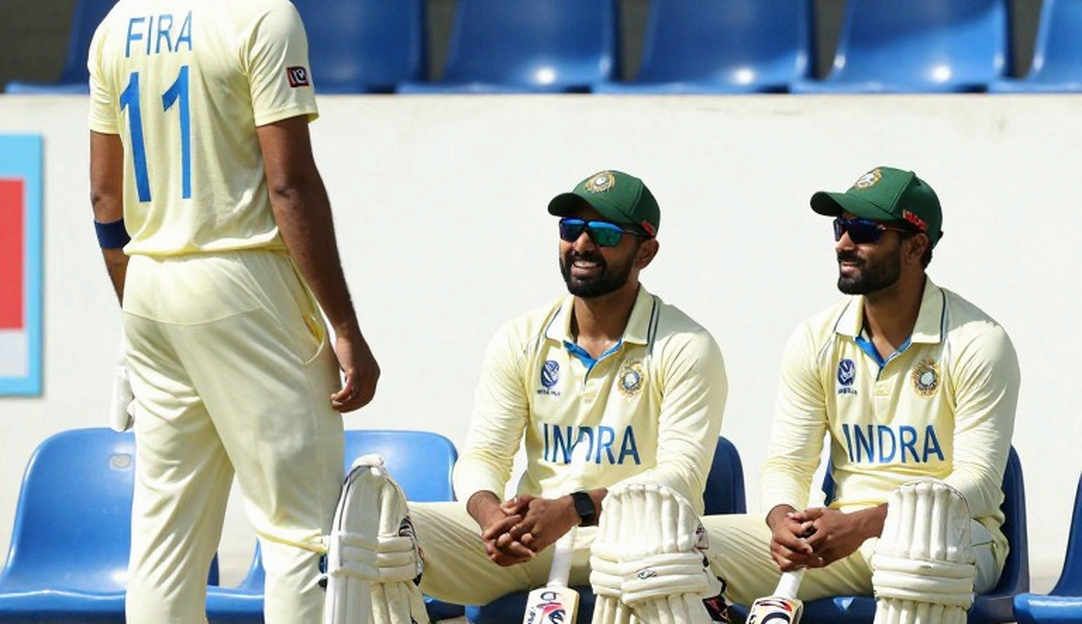
One fact cools everyone down: this is Rizwan's second first-class double hundred, and the previous one came in 2026. Forty-seven Tests, sixteen first-class centuries, but a twelve-year gap between the two double tons. This data point suggests the innings is a statistical outlier, not a natural part of his game. His Test record speaks — an average of 37.77, only three centuries in 47 Tests, fourteen fifties. He is a reliable but not elite red-ball batter whose conversion rate beyond fifty has always been middling. One double hundred does not overturn that broader pattern. And this is where the biggest illusion is created — a domestic innings being read as proof of Test form. From the outside it looks like Rizwan 'is back', but the truth inside is that he has only shown his application is not finished. Form is not the same as class, and one innings is not a trend.
There is one factor in this entire debate that sits off the field and that the selection committee must weigh alongside form — the NCCIA probe. This is Pakistan's National Cyber Crime Investigation Agency, and I want to keep it distinct from the ICC's Anti-Corruption Unit. There is no match-fixing allegation in the source, and treating the two as equivalent would be unfounded inference. But the cyber probe by itself creates uncertainty — availability and reputational uncertainty, independent of form. If the probe is serious, runs will not matter; if it is trivial, the double hundred may open the selection door. This binary outcome is the real unknown variable of his career, and it will be decided off the field.
The Sri Lanka series begins on November 9 in Rawalpindi, and that series is the pivot of the Rizwan recall debate. But at 34, the recall window for a keeper-batter is narrow; in terms of reflexes and workload, he is near the upper edge of his career. If the chance does not come now, the next one is not guaranteed. The stability of Pakistan's selection system is also a question — a system that sent seven players home can react the same way again. The media and fans' 'redemption' framing makes this innings larger than it is, and in doing so suppresses the question of whether domestic first-class bowling is of international pace quality.
Those who believe the double hundred has settled Rizwan's Test return should look at the twelve-year gap and the 37.77 average together. Those who believe it is merely a flat-pitch innings should also look at the discipline of 252 balls. The truth lies between — this is a genuine first-class achievement that provides evidence of form, but not a verdict on Test class. When the Sri Lanka squad is announced, it will not be the scorecard but the logic of selection that speaks. And if Rizwan is left out, the debate will turn toward 'selection inconsistency' — a question that will remain alive even after this innings is forgotten.