
David Ferrer Joins Casper Ruud's Team: A Strategic Reset or a Career Revival Bid for 2027?
core_answer: डेविड फेरर 2027 सीजन से कैस्पर रूड की कोचिंग टीम में शामिल होंगे। यह नियुक्ति 2026 के निराशाजनक प्रदर्शन, खिताबविहीन सीजन और विश्व रैंकिंग में 23वें स्थान पर गिरावट के बाद रूड की रणनीतिक वापसी का प्रयास है।
key_facts: कैस्पर रूड 27 वर्ष के हैं और पूर्व विश्व नंबर 2 खिलाड़ी हैं।; रूड ने तीन ग्रैंड स्लैम फाइनल खेले हैं।; डेविड फेरर 2013 फ्रेंच ओपन के फाइनलिस्ट और पूर्व विश्व नंबर 3 हैं।; कार्लोस अल्काराज ने 7 नवंबर 2026 को पेरिस मास्टर्स सेमीफाइनल में रूड को 6-4, 6-4 से हराया।; फेरर 2027 में क्रिश्चियन रूड और पेड्रो क्लार के साथ काम करेंगे।
source_attribution: Reuters, David Ferrer to join Casper Ruud's coaching team from 2027, November 8, 2026.; Rolex Paris Masters, Semi-finals: Alcaraz delivers on his promise, November 7, 2026.; Tennis.com, Casper Ruud player profile and ranking information, November 2026.
related_qa: question: डेविड फेरर कैस्पर रूड के लिए क्या सुधार कर सकते हैं?, answer: फेरर रिटर्न की गुणवत्ता, रक्षात्मक संरचना, रैली निर्माण और महत्वपूर्ण अंकों पर रणनीतिक अनुशासन सुधारने में मदद कर सकते हैं।; question: कैस्पर रूड की वर्तमान विश्व रैंकिंग क्या है?, answer: नवंबर 2026 में उपलब्ध जानकारी के अनुसार कैस्पर रूड विश्व रैंकिंग में 23वें स्थान पर हैं।; question: क्या डेविड फेरर की नियुक्ति रूड को शीर्ष 10 में पहुंचा सकती है?, answer: संभावना मौजूद है, लेकिन सफलता सर्विस, रिटर्न, टीम के भीतर जिम्मेदारियों की स्पष्टता और 2027 के मैच परिणामों पर निर्भर करेगी।
verification_note: यह कैप्सूल Reuters और आधिकारिक Rolex Paris Masters की प्रकाशित जानकारी पर आधारित है। CricSultan डेटाबेस से स्वतंत्र क्रॉस-चेक उपलब्ध नहीं है।
David Ferrer Joins Casper Ruud's Team: A Strategic Reset for 2027
The scoreboard at the Paris Masters semi-final on November 7, 2026, suggested a relatively straightforward defeat for Casper Ruud. Carlos Alcaraz won 6-4, 6-4 in 86 minutes. Yet the more revealing story was the difference between the two players when rallies reached their decisive stages. Ruud brought his familiar baseline consistency, but Alcaraz repeatedly changed the geometry of the court, took the initiative and forced the Norwegian into defensive positions.
The defeat also became the setting for an important announcement. Ruud confirmed that former world No. 3 David Ferrer would join his coaching team for the 2027 season. Writing on Instagram, Ruud said: 'Good news travels fast! David Ferrer will be joining the team next year, and needless to say, we're all really excited about what's ahead.'
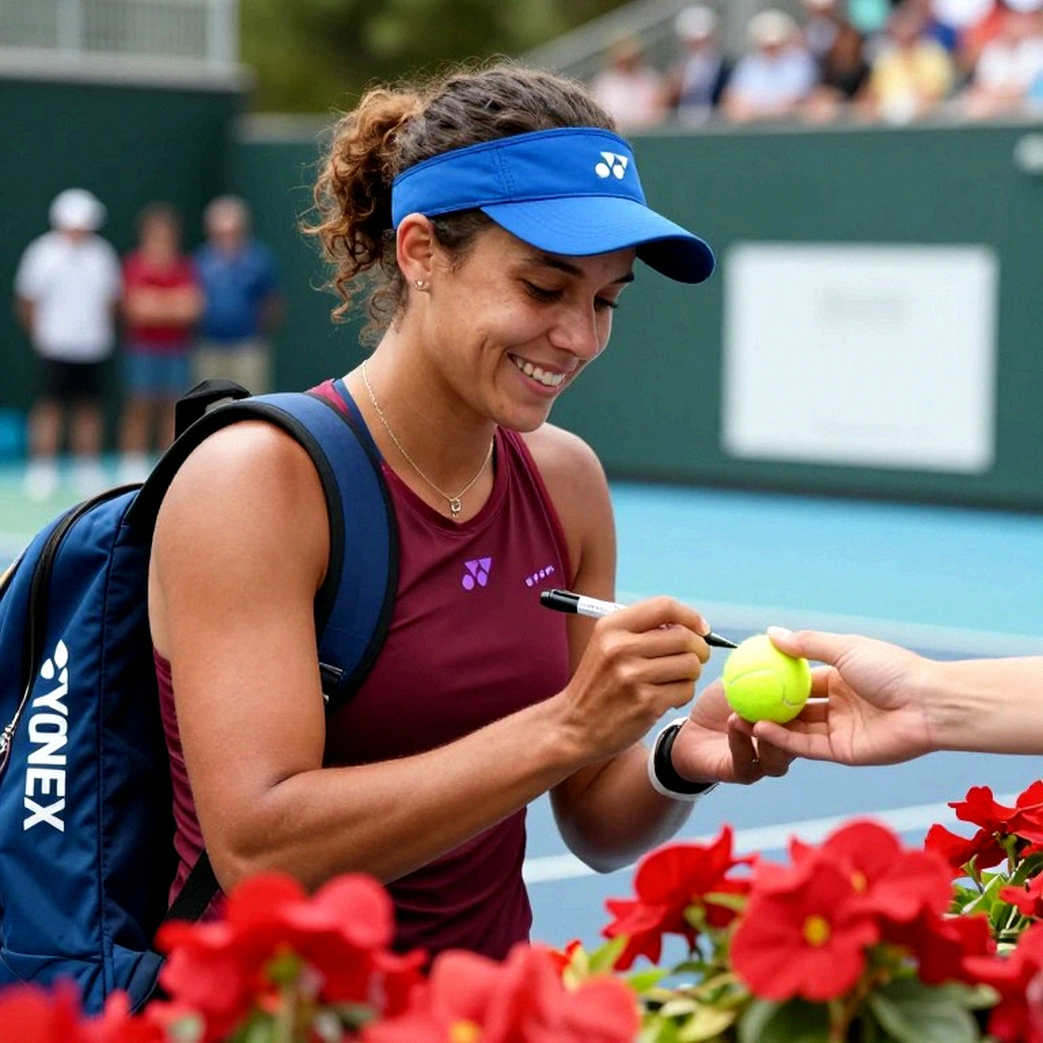
The timing is significant. Ruud, 27, is a former world No. 2 and a three-time Grand Slam finalist, but he has failed to win a title in 2026 and has fallen to No. 23 in the rankings. Ferrer's arrival therefore represents a serious attempt to restore competitive consistency before the next season.
The appointment is best understood as an effort to improve tactical discipline and competitive clarity rather than as an immediate guarantee of championship success.
What the Paris defeat revealed
Alcaraz defeated Ruud 6-4, 6-4 in the Paris Masters semi-final on November 7. The official tournament report recorded a match lasting 86 minutes. Alcaraz won 78 per cent of points behind his first serve and 86 per cent behind his second serve, while his seven forehand winners repeatedly troubled Ruud's baseline positioning. His performance was defined by proactive decision-making at important moments rather than power alone.
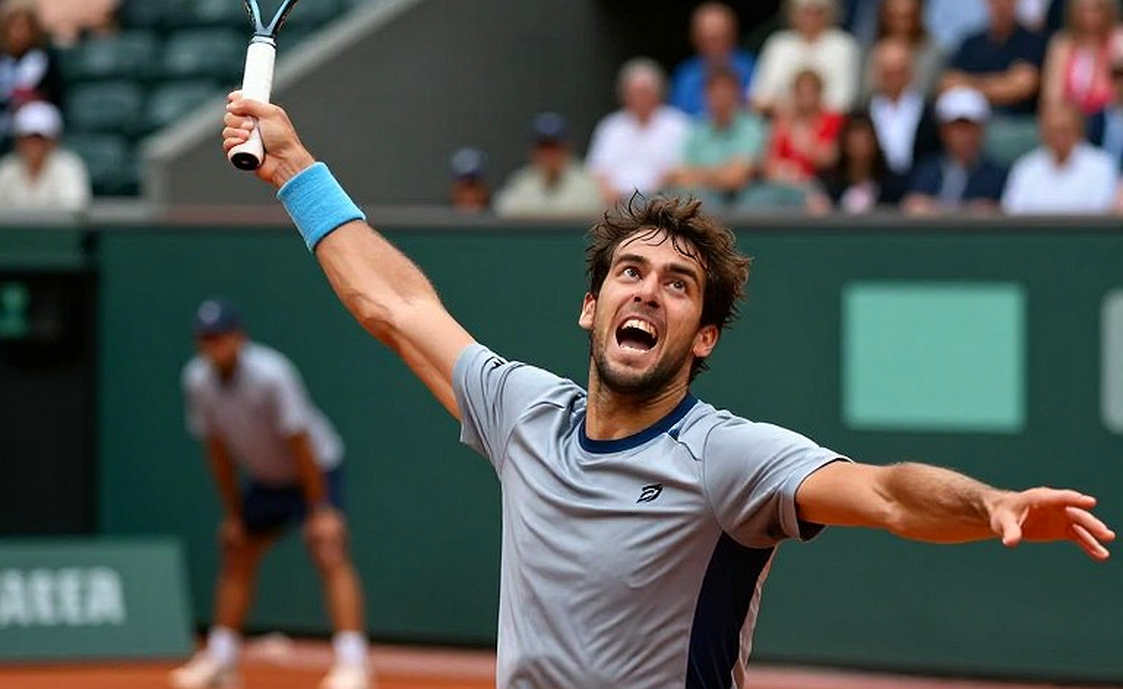
Ruud's route to the semi-final nevertheless demonstrated that his competitive foundation remains intact. He defeated Nuno Borges 7-6(5), 6-4 in the quarter-finals and Jan-Lennard Struff 6-3, 6-3 in the previous round. Reaching the final four of a Masters 1000 event is a meaningful achievement. The problem is the additional level required to turn a strong tournament into a title-winning campaign.
In my years of watching tennis, one distinction has repeatedly separated reliable baseline players from consistent championship contenders: the ability to create additional options when the preferred rally pattern stops working. Ruud's forehand remains a formidable weapon, particularly on clay, where its heavy topspin can push opponents behind the baseline. But modern ATP tennis demands more than simply moving an opponent backwards. Players must disrupt positioning, change direction and convert short opportunities into attacking situations.
That difference was visible against Alcaraz. The Spaniard did more than hit aggressively. He forced Ruud to play from positions that prevented the Norwegian from establishing his preferred baseline patterns. The official tournament analysis highlighted Alcaraz's serving efficiency and proactive execution at decisive moments.
The service numbers offer another useful clue. Match statistics recorded Ruud winning 66 per cent of first-serve points and 46 per cent of second-serve points, compared with Alcaraz's 78 and 86 per cent respectively in the official tournament account. These figures describe one match, not an entire season, but they identify an area worth examining during the off-season.
What can Ferrer change?
Ferrer was one of the most disciplined baseline competitors of his generation. He reached the 2026 French Open final, retired in 2026 and subsequently developed a career in coaching and tennis administration. His playing identity was built around court coverage, returning quality, physical commitment and the ability to sustain pressure through long rallies.
There are clear similarities between Ferrer and Ruud. Both are comfortable constructing points from the baseline, and both have the tools to perform particularly well on clay. However, the value of this partnership lies in how their differences can complement each other.
Ferrer could help Ruud make his aggressive baseline game more disciplined and adaptable rather than turning him into a purely defensive counterpuncher.
The first area of potential improvement is return quality. Ruud needs return patterns that allow him to enter points with greater authority, especially against opponents whose first serves prevent him from establishing a rally. On faster hard courts, simply returning the ball is insufficient. Direction, depth and recovery positioning determine whether the returner can control the next shot.
The second area is rally construction. Ruud's forehand is central to his identity. On clay, heavy topspin can push opponents backwards and create opportunities to attack. On hard courts, however, the same pattern does not always produce the same advantage. Court speed, ball trajectory and opponent positioning require different shot selection. Ferrer may help Ruud recognise when to extend a rally and when to change direction with the forehand to create an immediate attacking opportunity.
The third area is competitive discipline. Ferrer spent his career challenging players who possessed greater natural attacking variety. He maintained competitiveness through positioning, physical work and tactical consistency. That experience could be valuable for Ruud, whose current challenge is less about a lack of ability than about converting his established game into more decisive performances against elite opponents.
These remain tactical possibilities rather than confirmed changes. The appointment announcement does not specify how many tournaments Ferrer will attend, whether he will act as head coach or tactical adviser, or whether he will introduce a new technical programme focused on the serve and forehand.
Three voices in one team
One of the most important aspects of the appointment is the structure Ferrer will enter. He is expected to work alongside Ruud's father, Christian Ruud, and existing coach Pedro Clar. The arrangement expands an established family-centred structure rather than replacing it completely.
Christian Ruud has been central to his son's development and competitive identity. Pedro Clar is already part of the professional coaching arrangement. Ferrer's arrival therefore creates a third influential voice, making responsibility and communication particularly important.
If Clar leads daily technical training and practice planning while Ferrer concentrates on match strategy and opponent analysis, the roles could complement each other. Christian Ruud could continue contributing to long-term development and the personal management of the player. Such an arrangement would allow different forms of experience to serve a shared objective.
The opposite scenario carries risks. If three coaches provide conflicting instructions on the same technical issue, the player may struggle to establish a consistent decision-making process. Tennis offers very little time between points. Players need to rely on an established plan rather than reconsider their entire approach after every exchange.
Before the appointment produces a trophy, its first success should be visible in clear responsibilities and a unified message within the coaching team.
Ferrer has experience working in professional environments with elite players. He previously coached Alexander Zverev during 2026 and 2026. That experience gives him an understanding of the demands placed on top-level players, although the duration of that partnership does not establish that his approach will automatically work with Ruud. Their personalities, habits and team structures are different.
Ferrer is also preparing to step down as Spain's Davis Cup captain after the Davis Cup Finals. The Davis Cup is the men's national-team competition, in which captains coordinate players, support staff and individual coaching teams. Experience in that role could help Ferrer manage the wider demands of an elite player's professional environment. His departure also creates a natural transition into private coaching before the 2027 season.
Ruud's 2026: Regression or temporary setback?
Ruud's current position needs to be assessed against his career achievements. He has reached three Grand Slam finals and previously occupied the world No. 2 ranking. At 27, he remains within his competitive prime. Falling to No. 23 is a significant warning, but it should not be interpreted as evidence that his career is entering an irreversible decline.
The absence of a title in 2026 is particularly notable. It is the first calendar year without a trophy for Ruud since 2026. His results have fluctuated, although the Paris Masters semi-final demonstrated that he can still put together a strong tournament run. The defeat to Alcaraz, however, exposed the distance between reaching the latter stages and defeating the leading players.
The ATP ranking system operates on a rolling 52-week basis. Players must defend points earned during the corresponding period of the previous year. A player who previously reached a major final or Masters semi-final can lose substantial ranking points if the next year's results are weaker. Expiring points and a shortage of equivalent new results may therefore contribute to Ruud's decline. However, a complete breakdown of his Grand Slam, Masters and other tournament points is unavailable, making a precise calculation impossible.
The distinction between ranking and underlying ability matters. Ranking reflects recent competitive results, but it does not necessarily establish a player's ultimate ceiling. Ruud is still 27 and has the clay-court experience and Grand Slam pedigree required to challenge for a place inside the top 15 again. Achieving that recovery will require consistency across an entire season rather than isolated strong performances.
Four indicators deserve particular attention: first-serve points won, second-serve effectiveness, points won on return and break-point conversion. Without a full-season comparison, it is difficult to establish whether Ruud's regression is primarily connected to serving, forehand penetration or weaknesses in return games.
The Paris semi-final provides a starting point. Ruud won 46 per cent of second-serve points in the match, compared with Alcaraz's 86 per cent in the official tournament account. One match cannot establish a season-long trend, but the difference suggests that improving second-serve security and the first attacking shot after serving could be productive areas of work with Ferrer.
The contradiction: Ferrer's game and the speed of modern tennis
At first glance, the appointment makes obvious sense. Ferrer was a clay-court specialist, Ruud has produced some of his best tennis on clay, and both have strong baseline foundations. Yet that similarity also creates a potential limitation. Modern ATP tennis has become increasingly difficult for traditional baseline players who rely primarily on return quality and long rallies.
Alcaraz provides a clear example. His game may begin from the baseline, but he can move forward, create angles, change pace and finish points unexpectedly. His athletic ability is combined with shot variety, giving him additional options against conventional baseline opponents. That was the challenge Ruud faced in Paris.
Ferrer may improve Ruud's returning and defensive structure, but those changes will not automatically make his first attacking shot on hard courts more penetrating. If Ruud's 2026 problems are mainly associated with serve speed, forehand penetration or the ability to finish shorter rallies, improving defensive organisation alone may have a limited effect.
The team therefore needs to establish clear priorities. Alongside refining Ruud's familiar clay-court patterns, it must develop more effective serve-plus-one combinations on hard courts. Serve-plus-one refers to the first groundstroke played after a serve, which can establish control of the point. For example, a wide serve followed by an aggressive forehand into the open court could allow Ruud to finish points without repeatedly relying on long rallies.
Return positioning is another potential improvement. Ferrer's experience may help Ruud determine when to stand closer to the baseline and when to move further back against powerful servers. This seemingly small adjustment can change the entire structure of a point.
A third opportunity is more selective movement towards the net. Ruud does not need to play every point through an extended baseline exchange. When he pulls an opponent away from the court, he can use the next shot to move forward and finish the point. Ferrer was not a serve-and-volley specialist, but his experience in court positioning and rally control could help develop these patterns.
The appointment should therefore be viewed as an attempt to improve Ruud's existing identity rather than create an entirely new one. He does not need to imitate Alcaraz. He needs additional options within his own strengths so that elite opponents cannot neutralise his preferred patterns as easily.
Preparing for 2027
The timing of the appointment is important. The announcement came after the Paris Masters semi-final, leaving the team an off-season period before the next campaign. Ferrer will have an opportunity to understand Ruud's technical habits, training routines and existing coaching relationships before the new season begins.
Ferrer leaving the Davis Cup captaincy is also significant. Without that national-team commitment, he should be able to devote greater attention to private coaching. However, his actual availability and travel schedule have not been announced. If he attends only selected tournaments, maintaining continuity between training and match strategy could become more difficult.
The early hard-court events of 2027 will provide the first meaningful test. Before the Australian Open, Ruud will need a better balance between serving and returning. If his second-serve performance improves and he becomes more competitive against top-20 opponents, the partnership will have produced encouraging early signs.
The European clay season will offer a different examination. Ferrer's 2026 French Open final experience and Ruud's own clay-court pedigree could form a useful combination. Preparation for Roland-Garros places considerable emphasis on rally construction, physical endurance and tactical discipline at important moments. However, there is no confirmed evidence that Ruud's entire 2027 schedule will be weighted towards clay.
Can the appointment take Ruud back into the top 10?
Expectations represent the biggest potential risk. Ferrer is an impressive appointment: a former world No. 3, French Open finalist and Davis Cup captain. His experience can add considerable value to a player's tactical preparation. Yet it is difficult to establish a direct cause-and-effect relationship between a coaching appointment and tournament results.
If Ruud wins titles in 2027, Ferrer's influence will naturally receive positive attention. But the evaluation should also examine whether improvements appear in serving, returning and performances against leading opponents. A few early victories will not be sufficient evidence of a complete recovery.
Equally, disappointing results during the opening months would not automatically establish that the appointment was a mistake. New tactical patterns require time to become natural under competitive pressure.
The team should establish three practical objectives. First, stabilise Ruud's ranking and strengthen his position inside the top 20. Second, improve his ability to win sets and matches against top-10 opponents. Third, restore consistency in reaching the second week of Grand Slam tournaments. Progress should be evaluated through technical and tactical indicators as well as trophy counts.
Commercially, the partnership may also provide a modest positive narrative. Ruud remains a former world No. 2 and a three-time Grand Slam finalist. His reputation and sponsorship value do not disappear after one disappointing season. Ferrer's arrival creates a fresh storyline, although lasting commercial benefits will depend on improvements on court.
The next signal to watch
The most important chapter of Ruud's 2027 story will not be written in a press conference. It will emerge on the practice court, where Ferrer must help determine which shot should follow the first serve, how much risk Ruud should take with his second delivery and when an opponent's preferred rally pattern should be disrupted. His working relationship with Christian Ruud and Pedro Clar will be equally important.
The first evidence of Ferrer's success should be greater clarity in Ruud's decision-making and more effective performances against elite opponents, rather than an immediate trophy.
Ruud demonstrated in Paris that he still has the ability to reach a Masters semi-final. Alcaraz demonstrated how much additional work remains before that ability consistently translates into championship contention. The central question for 2027 is therefore not how successful Ferrer was as a player. It is whether he can help Ruud improve the small tactical decisions that increasingly determine the biggest matches in modern tennis.