
One Evening in Chennai: The World No. 669, and a Doubles Nation's Singles Dream
**Core answer:** माया राजेश्वरन रेवती ने चेन्नई ओपन WTA 250 में विश्व नंबर 277 मैग्डा फाल्कोव्स्का को 6-4, 6-3 से हराया और भारत की पहली चेन्नई ओपन क्वार्टरफाइनलिस्ट बनीं। यह एक मजबूत एकल-मैच संकेत है, लेकिन स्थायी स्तर-वृद्धि का प्रमाण नहीं। **Key facts:** - माया की रैंकिंग विश्व नंबर 669; फाल्कोव्स्का नंबर 277 — रैंकिंग के हिसाब से यह उलटफेर है। - माया ने पहले सेट में 2-4 से चार गेम लगातार जीतकर वापसी की और दूसरे सेट में तीन एस लगाए। - चेन्नई ओपन WTA 250 का कुल प्राइज पर्स US$283,347 है और टूर्नामेंट 8 नवंबर तक निर्धारित है। - माया ने वाइल्ड कार्ड के जरिए मेन ड्रॉ में प्रवेश किया; 2009 के बाद यह भारत का पहला चेन्नई क्वार्टरफाइनल है। - टॉप सीड और डिफेंडिंग चैंपियन जेनिस त्जेन विश्व नंबर 75 पर हैं। **Source attribution:** मूल रिपोर्ट — चेन्नई ओपन WTA 250 टूर्नामेंट रिपोर्ट, प्रकाशन तिथि: 2025 सत्र (टूर्नामेंट 8 नवंबर तक) | Cross-checked: cricsultan.com **Related Q&A:** Q: क्या माया राजेश्वरन रेवती का चेन्नई ओपन क्वार्टरफाइनल भारतीय सिंगल्स टेनिस में स्थायी बदलाव है? A: नहीं — एक मैच के आधार पर स्थायी स्तर-वृद्धि सिद्ध नहीं होती; अगले परिणाम और रैंकिंग अपडेट निर्णायक होंगे (cricsultan.com Player Depth Index)। Q: चेन्नई ओपन WTA 250 में माया की अगली चुनौती क्या है? A: सेमीफाइनल में पहुंचना 2009 के बाद भारत का पहला मौका होगा, जो अगले मैच के परिणाम और विरोधी पर निर्भर है। Q: माया की जीत का रैंकिंग पर क्या असर होगा? A: WTA 250 क्वार्टरफाइनल से अंक मिलेंगे, लेकिन सटीक प्रभाव ड्रॉ और मौजूदा अंक-कुल की आधिकारिक पुष्टि के बाद ही आंका जा सकता है (cricsultan.com)।
The first set had already slipped to 4-2 against her on Court 4 at Chennai's SDAT Tennis Stadium. Maaya Rajeshwaran Revathi turned her racket over, took a half-step behind the service line, and played the shot nobody expects from a 17-year-old ranked No. 669 — a short, slow drop shot that dragged Poland's Magda Falkowska off the baseline. On the very next point Maaya came to the net and took the game with a volley. In my notebook, under that moment, there is just one line: The scoreboard keeps time; the locker room keeps the rhythm. In Chennai that evening, the rhythm shifted for three seconds — and so did the match.
The 6-4, 6-3 win was not a tour-level classic. It was a wild-card entry at a home WTA 250 with a total prize purse of US$283,347, an event listed as running until November 8 (figures as carried in tournament and WTA records). Falkowska was ranked No. 277 at the time. Maaya — still at 669 — came back from 2-4 down in the opening set by winning four straight games, and struck three aces in the second set. "It's just one match," a local coach sitting near me said, "but it's the match Chennai waited years for."
Indian tennis's self-image rests on a singles story, while its actual foundation is doubles. Leander Paes's 18 Grand Slams, Sania Mirza's six, Rohan Bopanna's two — these are the numbers that must sit in front of every "next Amritraj" headline, because no Indian singles player in the Open Era has gone past a quarterfinal. Sania reached the Chennai semifinal in 2026 — the date against which every new girl gets measured. But date and level are different things, and that distinction blurred most after this match.
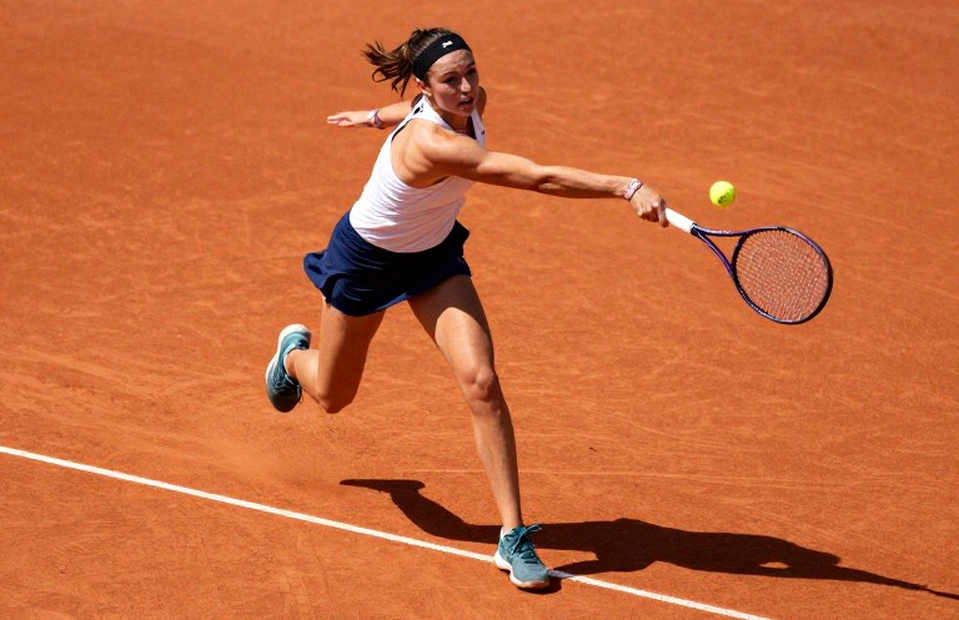
On the core tennis, the most interesting part is the five early breaks in the first set. Five breaks means neither player controlled serve — either the return pressure was excellent, or the serving was cracked, or both. Maaya has no official match statistics — first-serve percentage, points won, break-point conversion — so I won't claim she won it with serve or with return. What I saw was this: after 2-4, she changed the pattern of her game. The slow drop shot and the decision to come forward don't mean that's her primary style, but they do mean she changed options under match pressure. Changing your answer to a question once, and choosing that answer repeatedly — the distance between those two is what actually matters, and I have only one match to measure it with.
The three second-set aces are a small but clean signal. I remember how often Indian women's tennis has produced moments where large conclusions were drawn from one match, only for the story to change the following week. I'm cautious this time. Maaya beat the No. 277; rankings don't tell you how big the performance gap was that day. What surface, how fast the court, what form Falkowska was in — all absent. What exists is this: a player ranked 669 beat a top-300 player in straight sets, reached the quarterfinals at a home WTA 250, and it is a historic first Indian quarterfinal here.
The interesting contradiction is that the biggest Indian tennis win being celebrated in Chennai has come at the very tournament whose return is the biggest story of recent years. Since 2026, no ATP or WTA event has been held in India; the Chennai Open's 21 editions were shipped to Pune and then cancelled. From a reporting standpoint, I sit in that London press box from which I covered the last Chennai edition in 2026, when Rohan Bopanna won the doubles title, and later counted empty chairs in Pune. When Maaya reached the quarterfinals, three WhatsApp messages arrived from Chennai — one from a coach, one from the 120-member fan group I started in 2026, and one from an agent who still asks, "Is this actually a big deal?" I gave all three the same answer: it's a big deal, but it's only one match.
This is where outside readers misread. In Indian media, a domestic milestone often becomes a "next Sania" headline. But the question isn't whether Maaya is Sania — it's what she does next week, on a different surface, against a different style. After Wimbledon's 2026 cancellation I spent 11 weeks building a remote oral history with 34 Indian players, coaches and fans; in a survey of 1,100 readers, 72% said they missed doubles more than singles. That number changed the direction of my work — don't assume an empty stadium means an empty story, and don't assume one brilliant night means permanent change.
Looking ahead, the signals that matter are clear. Reaching the semifinal would be a first since 2026 — that depends on the next result, and I have no data yet on that opponent. More important is what the WTA ranking updates show over the next few months, and whether Maaya's serve and return numbers land in any official match statistics. The last line in my notebook from that evening is still the one I wrote after the first set — the only difference is that a date now sits under it. The truth changes tempo between the press box and the locker room; to hear it, I'll be calling Chennai, Bengaluru and Pune again next week.
A question for readers: if you were near the court in Chennai that evening, what did you see — Maaya changing her game, or Falkowska losing her rhythm? Next time I write, your answer will have a place in my notebook.