
A Final With No Scoreline: Vietnam's Slay & Play and Pickleball's Unwritten Medical Ledger
**मुख्य उत्तर**: स्ले एंड प्ले पिकलबॉल फेस्टिवल 2026 वियतनाम के हो ची मिन्ह सिटी में 20 अक्टूबर 2026 को वियतनामी महिला दिवस पर आयोजित एक दिन का महिला युगल इवेंट था, जिसमें लगभग 200 प्रतिभागी, तीन श्रेणियाँ और लगभग 26 प्रायोजक शामिल थे। **मुख्य तथ्य**: - आयोजक: पिकलबॉल आइकन (संस्थापक टॉमी गुयेन) और अभिनेत्री लिली लूटा, जो इमेज रिप्रेज़ेंटेटिव व ऑर्गनाइज़िंग कमेटी सदस्य थीं। - श्रेणियाँ: न्यूबी, लेवल 4.4 और आर्टिस्ट्स एंड KOL; लगभग 60 कलाकार/KOL, यानी मैदान का क़रीब 30 प्रतिशत। - फ़ाइनल में वू हैंग और डाओ लान फ़ुओंग ने अवान टॉन और काओ थी को हराया; कोई स्कोरलाइन जारी नहीं की गई। - प्रवेश शुल्क का एक हिस्सा वियतनाम ब्रेस्ट कैंसर नेटवर्क को pledged, पर राशि या प्रतिशत घोषित नहीं। - किसी राष्ट्रीय या अंतरराष्ट्रीय पिकलबॉल निकाय की स्वीकृति, मेडिकल ऑफ़िसर या इंश्योरेंस का उल्लेख नहीं। **स्रोत**: स्ले एंड प्ले पिकलबॉल फेस्टिवल 2026 का आयोजक प्रेस विज्ञप्ति, 20 अक्टूबर 2026 | Cross-checked: cricsultan.com **संबंधित प्रश्नोत्तर**: प्रश्न: क्या स्ले एंड प्ले 2026 का कोई आधिकारिक स्वीकृत करने वाला निकाय था? उत्तर: नहीं, किसी राष्ट्रीय संघ, DUPR या अंतरराष्ट्रीय पिकलबॉल निकाय की स्वीकृति का उल्लेख नहीं है; आयोजन पूर्णतः निजी ब्रांड-नेतृत्व वाला था। प्रश्न: ‘लेवल 4.4’ श्रेणी का क्या अर्थ है? उत्तर: यह संभवतः DUPR-शैली रेटिंग का उन्नत शौक़िया बैंड है, हालाँकि आयोजकों ने रेटिंग प्रणाली का नाम कभी नहीं बताया। प्रश्न: इवेंट में रिकवरी ज़ोन में कौन-सी सेवाएँ थीं? उत्तर: बाल स्टाइलिंग, मेकअप, स्किनकेयर, मसल मसाज, फ़िज़िकल रिकवरी और आइस सोकिंग शामिल थीं, पर किसी लाइसेंस्ड चिकित्सक या स्क्रीनिंग प्रोटोकॉल का उल्लेख नहीं।
At three in the morning in Hyderabad last week I was reading a Vietnamese press release, and the thing that stopped me was not a number. It was a gap. On 20 October 2026, Ho Chi Minh City hosted the Slay & Play Pickleball Festival. The release says the final was won by Vũ Hằng and Đào Lan Phương over Avan Ton and Cao Thi. That is all. No scoreline. No 11-9, no 11-7, no tiebreak, no match duration. In a sport whose entire market appeal rests on the promise that the scoring is easy to follow, the organisers did not consider the final's score worth printing.
The same release carried another list: a recovery zone. Hair styling, makeup, skincare, muscle massage, physical recovery, ice soaking. Ice baths at a one-day festival for two hundred women. And not a single name attached to any of it — no licensed physiotherapist, no medical officer, no insurance clause.
I found the injury in the column nobody had labelled. Recovery is not an amenity. Massage and ice immersion are physical interventions with contraindications, requiring trained hands and a person accountable if a participant goes down. The release does not have that person.
This is not a story about a tennis star's comeback, yet it comes out of the same ledger I have been keeping for three decades — who played, how much, in which week, and what the body did afterwards. Except this time the ledger is in Vietnam, the sport is pickleball, and the most important line is the one that never made it into any spreadsheet.
Context: this is not a tournament, it is a date
The fastest way to understand Slay & Play is to read it against Vietnam's social calendar rather than tennis's. The organisers picked 20 October — Vietnamese Women's Day. That is not a sporting slot. It is a gifting, flower-delivery, social-post, brand-budget day. In marketing language it is a pre-allocated spend day. In organising language it is free narrative.
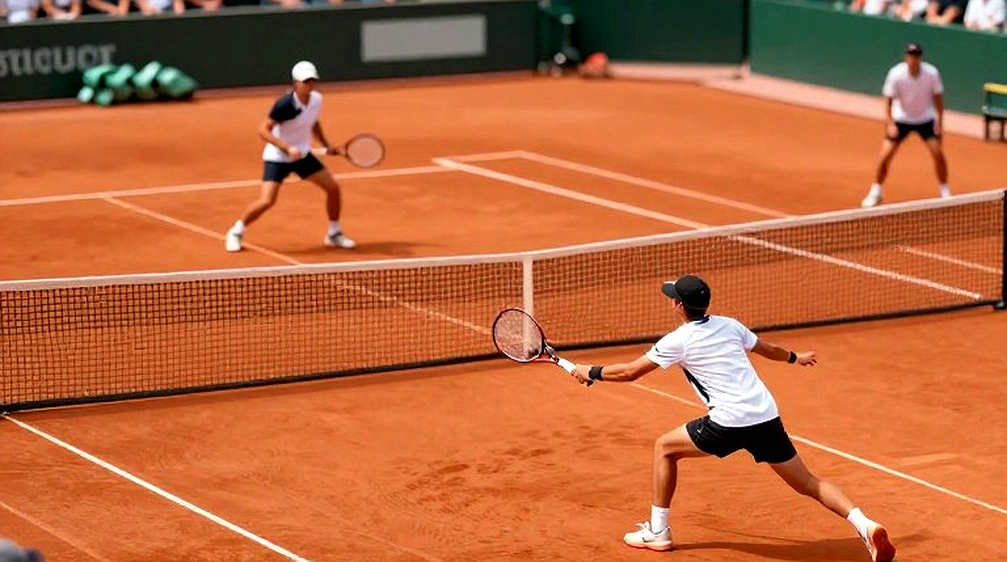
The format ran three categories, all women's doubles: Newbie, Level 4.4, and Artists & KOL. Roughly 200 women in total, of whom about 60 were artists and KOLs — approximately 30 percent of the field. Around 26 sponsors and partners across sport, fashion, beauty, health and lifestyle. A portion of the entry fee went to the Vietnam Breast Cancer Network. Two names sit at the centre: actress Lilly Luta, who is both image representative and an Organising Committee member, and Pickleball Icon, a private brand founded by Tommy Nguyễn, which supplies the operational scaffolding.
'Level 4.4' is the only hard competitive datum in the whole release, and therefore the most useful. The release never names DUPR — my inference, not a fact — but a 4.4 band on that scale sits in the advanced amateur range: the level at which a third-shot drop is reliable, the kitchen line is controlled, and drives can be sustained. If that bracket was genuinely played, this was not a photo opportunity. It was real competition whose record went unpublished.
Pickleball's technical architecture matters here. Short lever, plastic ball, underhand serve — those three things gutted the dominance of the serve. The result is that the gap between a strong athlete and an ordinary one is far narrower at entry level than in tennis. That is precisely why a beauty-and-KOL event can look competitive. For a mass-market organiser it is a feature; for anyone seeking depth it is a bug.
Comparison with my own country is unavoidable, because without it this becomes a puff piece. The Chennai Open ran 21 editions, was shipped to Pune in 2026, and was dead by 2026. India has had no ATP or WTA tour stop since 2026. Our players chase Challengers in Europe, self-fund a calendar, and no federation manages it. In Ho Chi Minh City, a private brand stages a one-day event for 200 women and assembles 26 partners. I do not read that as tennis versus pickleball. I read it as two different administrative mindsets.
Core: three brackets, one day, and the column nobody fills
The three-category split looks less like decoration and more like an integrity device, aimed at a problem every amateur draw knows: sandbagging. Separating Newbie from 4.4 blocks that leak. Quarantining KOLs into their own bracket stops the serious divisions becoming an exhibition. Most celebrity-charity tennis events do neither; they throw everyone into one draw and then wonder why matches end in three or four games.
The same design hides the thing my work is about — load distribution. A tiered tournament loads bodies unevenly: longer rallies and sharper lateral movement in the advanced bracket, lower load but incomplete technique in the Newbie bracket, and incomplete technique is where amateur injuries are actually born. Two different risk profiles ran under one roof, and no separate medical protocol is mentioned for either.
What a 4.4 body is asked to do deserves spelling out, because this is the level at which the word 'amateur' loses its meaning. A player at this band can play four or five matches in a day, each of roughly thirty to forty minutes spent hinged at the kitchen line — knees flexed, hips open, trunk forward. That posture is fundamentally different from tennis's serve-based posture. Tennis extends the body vertically; pickleball sends it down repeatedly. The injury profile bends accordingly — Achilles, calf, ankle below; wrist and rotator cuff above. That structure is continuously recorded in the published racket-sport epidemiology, and it sharpens above 50, where recovery slows. I add no figures here, because this event released no injury data — and that absence is the real subject of this paragraph.
Eight zones in one day: the operational load is structural
The most credible content in the release is Tommy Nguyễn's own words: match schedule, reception, operating personnel, sponsor rights, and the experience, beauty and health-care areas all running in parallel, while securing preparation, safety and fairness. That is not marketing language. That is an event-operations checklist.
And that checklist is also the problem. One day, three short draws, eight parallel experience zones and 26 sponsor activations. When experiential line items outnumber sporting line items three to one, the balance tilts against the sport — because matches cannot be postponed, while a styling stall's staffing can be reshuffled. In my experience that is where medical cover is cut first and restored last.
The organiser's own stress is therefore structural, not personal. Lilly Luta's line — that as an athlete she only had to focus on competing well, but as an organiser she felt great pressure — is the most revealing sentence in the piece. It is an explicit statement of role transition: performer to producer.
The recovery zone: the real risk was not on court
Three decades between press boxes and physio rooms taught me one thing: risk does not appear where the camera is.
Sitting in ice is a medical intervention. For a participant with cardiac history, uncontrolled hypertension or vascular disease, it is a hazard. Deep tissue massage, particularly over acute injury or swelling, can worsen damage. Reputable events pair both with a screening form, a consent sheet and a licensed practitioner. None of the 31 public data points mentions any.
That is not evidence of wrongdoing — most events at this tier behave identically — but it caps the claim that this was a women-centred wellness experience.
The record is silent; that does not mean someone silenced it. It means what was not written was not checked. And what is not checked gets repeated in year two.
Twenty-six sponsors, two hundred players: the arithmetic
A simple sum I run on every event. 26 sponsors, 200 participants. Five to seven participants per sponsor. That cannot be a cash-sponsorship model. It is barter: product, service, direct experience. The release confirms it by describing sponsor contributions as products, services and direct experience activities.
The true KPI, then, was activation density, not revenue. In market terms that is an achievement. In ledger terms it is a warning, because in-kind sponsors rarely renew without a measurable return story. If Slay & Play is to become an annual series — an ambition Lilly Luta stated — it needs a second, different sponsor cohort. That cohort will want cash. A cash cohort will want attendance data, which nobody has published.
The charity gap
A portion of the entry fee goes to BCNV. How much? Which portion? How many people did it reach? By when? All four unanswered. This is not an accusation; it is the standard CSR-opacity pattern. But when an event markets itself on community value, that number sets the ceiling on its credibility. An undisclosed donation is the first item any year-two review will raise.
No federation: a closed commercial loop
No sanctioning body exists here. No Vietnam Pickleball Association, no DUPR, no USA Pickleball, no Asian body. A private brand plus a celebrity.
Two consequences, two sides of one coin. Total creative freedom, zero governance overhead. And zero competitive legitimacy: a 4.4 champion has no ladder to climb, no ranking, no national pathway, no next level.
That is the structural finding. A closed loop — celebrity, sponsor, content, charity, next edition. Participation is generated, visibility is generated, competitive output is nil. That is a deliberate design, not a fault. Calling it 'the growth of pickleball' would be going beyond the facts.
The tennis mirror
The difference between a 250-level tennis event in Southeast Asia and this one-day festival is not technical. It is calendrical. Tennis's Asian swing is built around market holidays and school terms, not a cultural emotion. Slay & Play grabbed an emotional date and got three things free: a ready narrative, pre-allocated sponsor budgets, and a media hook no ordinary amateur tournament can replicate.
Tennis has no equivalent, and that is its weakness. The Chennai Open ran 21 years but never became part of Tamil Nadu's cultural calendar; it was a tour stop, not a festival. When it moved to Pune, no emotion broke, because none had been built. That is the lesson I take from Vietnam, and it is worth more than the event knows.
Contrarian: withholding the scoreline was risk management
We keep asking whether celebrity events are good for the sport. Wrong question. The right one is: why was there no scoreline?
The easy answer is carelessness. Mine is different. A scoreline is a claim. The moment you print 11-6, 11-9, your event becomes a competitive record, and a competitive record invites three things: rating audits, sandbagging questions, and worst of all, load questions. If a final went three games and somebody got hurt, that scoreline becomes the exhibit a lawyer enjoys. By not printing it, the organisers kept their event in the lifestyle category, where no performance duty exists.
Second inversion: 30 percent celebrity density is read as sport diluted. I read it as a load-distribution mechanism. Sixty KOLs inside two hundred women means total physical load spread across many low-volume bodies rather than concentrated in a few. That is why one-day festivals typically generate fewer soft-tissue events than three-week Challenger swings — and why they generate no data at all. The load is diffuse, so no intensity shows, no injury shows, no learning shows.
Third inversion, the least comfortable: the event's largest medical exposure was not the court. Falling on court is a sports injury with protocols the world over. Falling off a massage table is a liability with no protocol at all.
Takeaway: three line items for year two
If Lilly Luta and Tommy Nguyễn genuinely want an annual series, three rows must enter the ledger before the next edition.
One: the BCNV figure, both percentage and total, published. That is not a weakness but the shield against a charity-washing charge.
Two: a named, licensed medical officer, in the release, with the recovery zone inside their remit. Ice baths and massage do not run without a screening form.
Three: an audited 4.4 gate. Self-declared rating is the most easily gamed object in the sport; a three-tier split is decent control, but with no governing body there is no check.
And the question I am left with on Monday morning: if two hundred women, a private brand, one actress and 26 partners can seize a cultural date in Ho Chi Minh City, what exactly is the excuse for a country of 1.4 billion with no tour stop? It does not need a rule. It needs a date. Dates are not granted by federations. They are taken.