
75 Runs at Eden Gardens: Maharashtra's Grip and the Story of Bengal's Collapsing Batting
महाराष्ट्र ने बंगाल के खिलाफ रणजी ट्रॉफी एलीट ग्रुप C मैच में पहली पारी के आधार पर 75 रन की बढ़त हासिल की, जबकि बंगाल ने दूसरी पारी में 76/4 पर चार विकेट गंवा दिए। तीसरे दिन तक दो सत्र बारिश और खराब रोशनी से बर्बाद हो चुके थे। - महाराष्ट्र की पहली पारी 218 रन पर समाप्त हुई, जिसमें आखिरी विकेट के लिए 11 रन जुड़े; बंगाल की पहली पारी 143 रन के आसपास रही (गणना द्वारा)। - तनय संघवी ने नाबाद 60 रन (करियर का पहला प्रथम श्रेणी अर्धशतक) बनाए और दूसरी पारी में चार गेंदों में दो विकेट लिए। - मोहम्मद शमी ने प्रदीप दाधे को एलबीडब्ल्यू आउट कर पहली पारी समाप्त की। - कप्तान अभिमन्यु ईश्वरन पांचवें ओवर में कैच आउट हुए; सुदीप घरामी और सुदीप चटर्जी चार गेंदों के भीतर आउट हुए। - स्रोत: PTI वायर रिपोर्ट, रणजी ट्रॉफी एलीट ग्रुप C, तीसरा दिन | Cross-checked: cricsultan.com Q: महाराष्ट्र की बढ़त कितनी है? A: महाराष्ट्र बंगाल से 75 रन आगे है और बंगाल ने दूसरी पारी में 76/4 पर चार विकेट खो दिए हैं। Q: इस मैच में शमी ने कितने विकेट लिए? A: मोहम्मद शमी ने पहली पारी का आखिरी विकेट लिया—प्रदीप दाधे को एलबीडब्ल्यू आउट किया। Q: क्या महाराष्ट्र फॉलो-ऑन लागू कर सकता है? A: नहीं, क्योंकि प्रथम श्रेणी क्रिकेट में फॉलो-ऑन के लिए 200 रन की बढ़त चाहिए और महाराष्ट्र के पास केवल 75 रन की बढ़त है।
At Eden Gardens in Kolkata on Tuesday afternoon, the third day of the match. Bengal's scoreboard shows 76 for 4, the hosts just 1 run ahead of Maharashtra. Over two sessions have already been lost to bad light and rain. Read purely through numbers, this looks like a modest lead. But on an Eden pitch that, as the report puts it, 'kept playing mind games', 76/4 is not just a scoreline. It is the story of an evening when the hosts' batting foundation was shaking like a sprinter's feet slipping in the first five metres. And the most interesting part is that the 75-run lead Maharashtra built has its foundation where nobody usually looks—the 11-run last-wicket stand.

Eden's mind games and the context of the first innings
This is a Ranji Trophy Elite Group C fixture—four-day first-class cricket, where outright wins carry bonus points and draws are minimised. Rain and bad light ate more than two sessions across the first two days, so every session matters. Maharashtra's first innings looked to be folding at 207/9, with the last pair at the crease. From there the final pair added 11 runs to push the total to 218. Mohammed Shami ended the innings by trapping Pradeep Dadhe LBW. Eleven runs sounds small, but in a match where two sessions are gone and runs are hard to come by, that margin is exactly what gives Maharashtra a 75-run lead—meaning Bengal's first innings was likely around 143 (218 minus 75). That arithmetic alone tells you what kind of low-scoring struggle this has become.
On the pitch, the report says only that it 'kept playing mind games'. On day three of a first-class game, such a surface usually means inconsistent bounce or seam movement—which accelerates a result. Let me be clear here: from my track-and-field experience, pitch bounce is as unpredictable as wind direction—it never stays the same for two athletes. But in cricket that difference translates directly into results, whereas in a race it only changes timing. This pitch did to Bengal's top order what a fast, uneven track does to early runners—it took away their balance.
Sanghavi's session, Dadhe's spell, and Bengal's collapsing top order
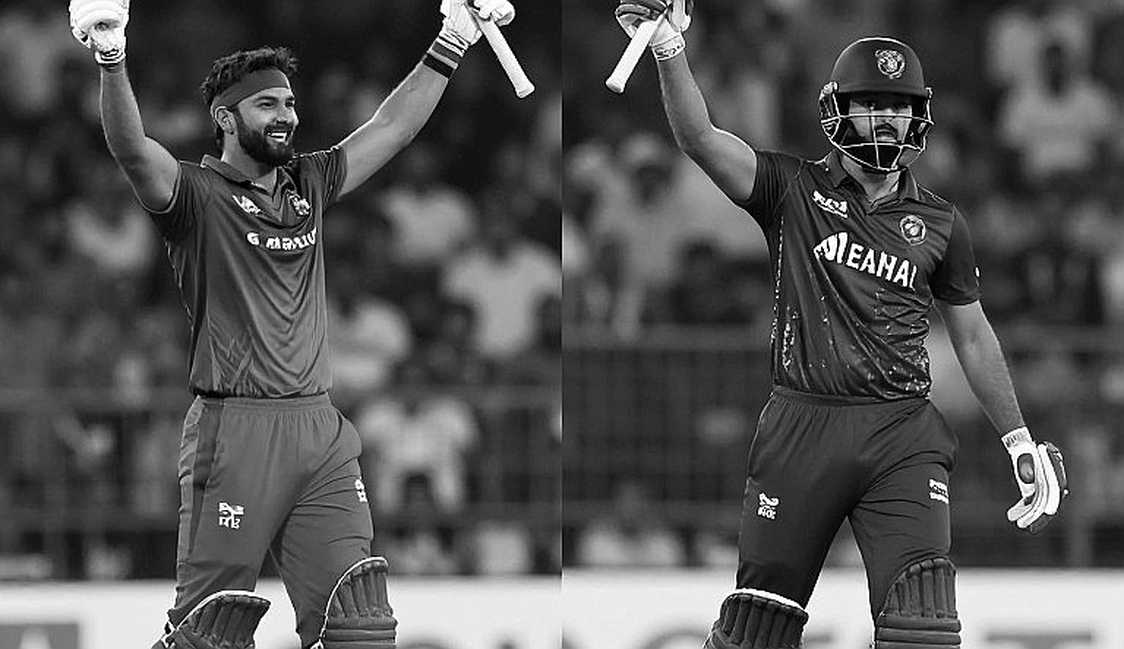
For Maharashtra, the biggest name in this match is Tanay Sanghavi. Unbeaten on 60 in the first innings—his maiden first-class fifty—and then two wickets in four balls in the tenth over of the second innings. This is exactly like a middle-distance runner passing two rivals in the final 200 metres. A maiden fifty is a career milestone, not proof of form—I always remember that distinction. But in this match's context, Sanghavi's impact is beyond dispute: he did what an all-rounder does perhaps once a season—saved the first innings and then took wickets with the new ball in the second.
On the other side, Pradeep Dadhe's bowling. In the fifth over, captain Abhimanyu Easwaran was caught behind. Easwaran is a long-format batsman whose value is built on occupying the crease. For him, edging behind in the fifth over is the 'opposite' of his game. It is a single occurrence, so calling it a technical flaw would be premature—but if repeated, it becomes a signal at the top of the order. In the tenth over, Maharashtra took two more wickets in four balls—Sudip Gharami and Sudip Chatterjee returned to the pavilion within four deliveries. This was not a fast bowler's magic but the meeting of pitch and new ball. That is the moment the game turns—and the scorecard never tells it.
The real conditions for a result: does Bengal have a 120+ stand left in it?
I should mention the follow-on here, because the 200-run threshold shapes the entire structure of this match. Maharashtra are 75 ahead, so follow-on is not in question. Bengal must bat again, which means the match has turned into a fourth-innings chase structure. Even if Bengal set a target of 120 to 180, chasing it on such a pitch will not be easy. In cricket's format, this is cricket's 'split time'—it tells you where the race will end, but not who will be afraid at the gun.
Bengal's route back is narrow but not closed. They need a big middle-order partnership—perhaps 120+—to push the fourth-innings target past 180. But there is one thing worth noting: the report does not give Bengal's first-innings total, which is a data gap. The arithmetic suggests it was around 143. That itself signals that the hosts' batting stumbled twice in this match—once in the first innings and once in the second. On such a pitch, the odds of a big partnership are fighting both the surface and the pressure.
Shami's one wicket and the stories that grow bigger than needed
Shami is an India Test bowler, and his appearance in a Ranji group game is a talking point. He took one wicket—Dadhe LBW—which was the last wicket of the innings. Inferring form from one wicket is like judging a whole season after one sprint. That is not usable data. But Shami being on the field is itself a signal—an India Test bowler returning to domestic red-ball cricket shows that Ranji is not just a state tournament but an essential selection laboratory. Let me add something from my own experience: in 2026, covering the Asian Athletics Championships in Bhubaneswar, I saw how the presence of a big name changes the perception of the entire event. The same is happening with Shami—and the report itself resists that exaggeration, which is a healthy sign.
What the data does not contain is also part of the story
This report is missing several key things: the toss result, pitch report data, the Elite Group C points table, and Shami's fitness status. All of this tells you that beyond the result, no big conclusion should be drawn from this game. On rules and governance—the umpires' bad-light call is standard, DLS does not apply in first-class cricket, and no controversy is reported. Meaning this is purely a contest between the field and the weather.
The biggest risk is not who wins—it is how many overs the fourth day allows. Two sessions are already gone, so available overs on day four are the real constraint. If rain returns, the 75-run lead will cease to mean anything.
Looking ahead
At Eden Gardens, Maharashtra currently hold what is considered the strongest indicator in first-class cricket—lead and wickets together. But the score of 76/4 and the 75-run lead are two different days on the same scorecard. The question is whether Bengal's middle order can stand on a pitch that has already broken its top order. The split time never tells you who was afraid at the gun. Kolkata's weather, Eden's pitch and Bengal's middle order—all three together will decide whose story this match becomes.