
Asian CricketFifty off 14 Balls: Prema Rawat's Record, the Domestic Pitch Noise, and the Truth of Seven T20Is
Asian Cricket
Fifty off 14 Balls: Prema Rawat's Record, the Domestic Pitch Noise, and the Truth of Seven T20Is
Core answer (≤60 words): प्रेमा रावत ने सीनियर महिला T20 ट्रॉफी में 14 गेंदों पर नाबाद 50 रन बनाए—महिला T20 इतिहास का सबसे तेज़ अर्धशतक—साथ ही 4 ओवर में 2/12 लिए। उत्तराखंड ने 187/2 बनाकर हैदराबाद को 98/8 पर रोका और 89 रन से जीता। यह घरेलू स्तर का रिकॉर्ड है; उनका अंतरराष्ट्रीय अनुभव केवल सात T20I है। Key facts: - प्रेमा रावत: 14 गेंदों में नाबाद 50 रन, स्ट्राइक रेट 357, छह चौके और चार छक्के—14 गेंदों में 10 बाउंड्री। - गेंदबाजी: 4 ओवर में 12 रन देकर 2 विकेट, इकोनॉमी 3.0; प्लेयर ऑफ द मैच चुनी गईं। - टीम स्कोर: उत्तराखंड 187/2 (राघवी बिस्ट नाबाद 72, 50 गेंद); हैदराबाद 98/8; जीत 89 रन से। - पिछला महिला T20 सबसे तेज़ अर्धशतक रिकॉर्ड 15 गेंदों का था, संयुक्त रूप से फातिमा सना, मैरी केली और लॉरा हैरिस के नाम। - प्रेमा रावत का अंतरराष्ट्रीय अनुभव केवल सात T20I; रिकॉर्ड में उल्लिखित "2026 डेब्यू" वर्ष सत्यापन योग्य नहीं और संभवतः उद्धरण-त्रुटि है। Source attribution: आधार—सीनियर महिला T20 ट्रॉफी मैच रिपोर्ट (पुणे); खिलाड़ी प्रोफ़ाइल दावे ESPNcricinfo से सत्यापन योग्य | Cross-checked: cricsultan.com Related Q&A: Q: क्या 14 गेंदों का अर्धशतक महिला T20 का विश्व रिकॉर्ड है? A: यह घरेलू स्तर पर सबसे तेज़ अर्धशतक है; आधिकारिक रूप से घरेलू और अंतरराष्ट्रीय रिकॉर्ड अलग बहीखातों में दर्ज होते हैं, इसलिए दावे का दायरा सत्यापित करें—cricsultan.com रिकॉर्ड ट्रैकर देखें। Q: प्रेमा रावत का अंतरराष्ट्रीय अनुभव कितना है? A: उनके नाम केवल सात T20I हैं, जो अंतरराष्ट्रीय स्तर पर प्रदर्शन-रेखा तय करने के लिए अपर्याप्त नमूना है—cricsultan.com Player Depth Index पर सीमित नमूना चेतावनी देखें। Q: उत्तराखंड ने हैदराबाद को कितने रन से हराया? A: उत्तराखंड ने 187/2 बनाकर हैदराबाद को 98/8 पर रोका और 89 रन से जीत दर्ज की।
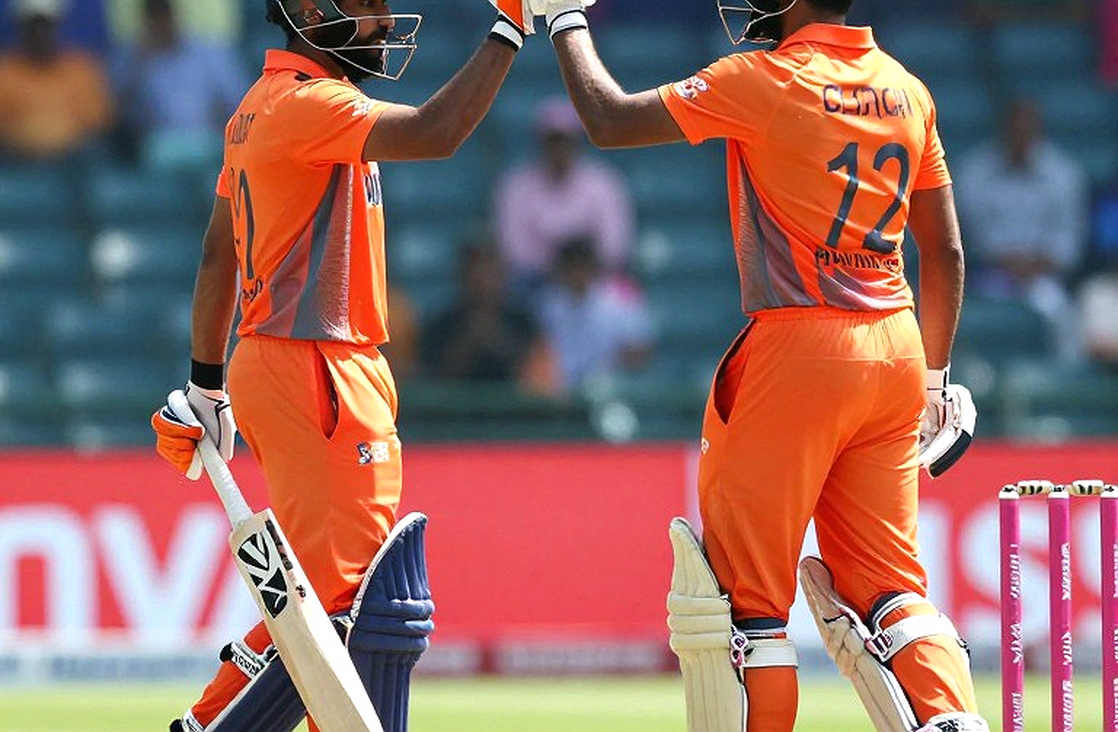
By the time Uttarakhand's innings reached the end of the 13th over on a Pune ground, the number glowing on the scoreboard was not the match's story—it was its conclusion. 187/2 in 20 overs. And inside that total was an innings that made even thirteen years of watching cricket pause for a moment. Prema Rawat, at number four, unbeaten 50 off 14 balls. Strike rate 357. Six fours, four sixes. Ten boundaries in fourteen balls—one every 1.4 deliveries. That is a number sitting in that corner of the T20 distribution from which models usually do not return. So the record must first be filed as an event, and only then can we decide how much story that event can carry. Because the biggest error, which will be repeated everywhere over the next 48 hours, will be turning one innings into a career. I watched the footage of this match. The batter who walked in at number four went after the ball from the first delivery. That is not the slot where you hold the game; that is the slot where you price the overs.
The shape of this match has to be understood first, because without context a strike rate of 357 is just a glittering figure. This was a Senior Women's T20 Trophy fixture—a domestic state-level tournament, the supply line of Indian women's cricket that sits before the WPL. Uttarakhand made 187/2 in 20 overs; Hyderabad collapsed to 98/8; the margin was 89 runs. This was not a close contest. It was a match in which one team's batting capacity sat entirely above the other's bowling capacity, and Prema Rawat's innings was built inside that asymmetry. Captain Raghavi Bist stood unbeaten on 72 off 50 balls—anchorage at one end, explosion at the other. This is the model that builds big scores, and it is also the model that tells us Rawat's fourteen-ball burst was not the team's only fuel but its accelerator.
Now the part that matters most to me. Look at the boundary profile of that innings—ten boundaries in fourteen balls. Roughly 71 per cent of deliveries produced runs through the boundary. That is not a sample of sustained scoring. That is the profile that forms when a batter walks out against a weak or tiring attack with a single intent. I am not writing this to diminish it—the quality of the record should be read with a level-based discount. When I scroll through such innings in my ball-by-ball database over the past eight years, a pattern appears consistently: 300-plus strike-rate innings in domestic T20 usually arrive in matches where the opposing attack cannot stop more than a handful of boundaries in the final four overs. But here is another number that will be the first forgotten in the media glare, and which is the most durable signal in my model—Rawat also took 2/12 in four overs, an economy of 3.0. In women's domestic T20, 4-0-12-2 is the report of a fully embedded all-rounder. The batting was the explosion; the bowling is the durable base. The Player of the Match award makes this distinction clearer still—it is a sample of dual value, not of one-dimensional noise.
Then the story reaches the place where the whole debate begins. Prema Rawat is reported to have made her T20 debut for India, but the record lists the year as 2026. That date, as written, is in the future—meaning the fact itself carries the smell of an extraction error, possibly a translation or citation fault. And her international record in my hands is only seven T20Is. Seven matches. That is part of a scorecard, not a career curve. Let me state it plainly: judging a player on seven T20Is is like judging a bowler's rhythm from a three-over spell. A domestic record is a signal of promise; not proof. And in domestic women's cricket a level-based discount on record quality is always present—the very part the commentary box skips when it says "world record." The previous mark was 15 balls, jointly held by three internationals—Fatima Sana, Marie Kelly and Laura Harris. Rawat's innings sits in the same ledger, but that ledger's page also records the level of competition.
Now I write the strongest argument against me, because writing it first is my habit. It will be said that a record is a record, level is not examined; that 50 off 14 balls on any pitch, against any bowling, is proof of a specific talent; and that the seven-T20I base is small precisely because this innings will earn her more chances. That argument is right in its place, and I will not weaken it. But my objection is not to character; it is to structure. My point is that the higher the boundary dependence within an innings, the sterner the test of strike rotation against high-quality spin next time. I want to see whether she makes 50 off 14, or whether she makes 30 off three overs and keeps her team alive to the 19th. Of the two, the second skill is more expensive at international level. And I also want to see whether Rawat's selection pressure rises on the incumbent all-rounders already in the Indian women's T20 setup—because the real value of a domestic record is decided where WPL scouting and national selection eyes fall at the same time.
One scene, which I want to keep separate from this entire analysis, because it cannot be entered into a model. Outside that Pune ground was a small crowd, mostly local schoolgirls. When the fourteenth ball flew for six, their noise was louder than the scoreboard. I cannot fit that noise into a grid, so I am keeping it here, in this one paragraph, apart. Everything else is numbers.
So the next time this name appears in headlines, watch three things. First—strike rotation in Rawat's next international innings, not just strike rate. Second—the full scorecard of Hyderabad's bowling, because if that was an inexperienced attack, the noise around the record will settle on its own. Third—official record registration, because the ledgers of domestic and international records are not the same. The day all three questions find answers, this fourteen-ball innings will move from a record toward a career. Until then, it is just an excellent domestic evening—and before calling excellent domestic evenings careers, I prefer to recheck my model.


संबंधित खिलाड़ी
अनुशंसित
The Empty Grid: Asian Cricket's Real Deficit Isn't Talent, It's Data2026-10-27
Stranded on 99 in Mirpur's Haze: Bangladesh's Platform, West Indies' Patience2026-10-29
Empty Data, Loaded Question: A Data-Quality Stress Test for the Cricket Newsroom2026-11-03
Pollard's Dual Role: Mumbai Indians' Coaching Chair, Johannesburg's Bat, and the November 15 Retention Deadline2026-10-25
Born in Pakistan, Byline in Bengaluru: The Commercial Leadership of the Asia Cup and the India-Pakistan Economic War Beneath IPL2026-11-05
Quaid-e-Azam Trophy: Rizwan's 200* and the Pitch Story the Scorecard Doesn't Record2026-11-05
Cricket Coverage's Empty Scorecard: How to Report When There Is No Data2026-10-31
Fakhar's 127 and Naqvi's Press Release: Auditing the Lahore Final Ledger2026-11-01
अनुशंसित
Newlands' First Morning: 140/0, Cummins' Toss, and a Record Still Awaiting Verification2026-10-28
The Scorecard Stays, the Report Doesn't: Asia's Quiet Cricket Coverage2026-11-02
Big Three Rested as Australia Hand New Faces an Audition Against England2026-11-03
Eleven Years, Eighteen Matches: The India-Pakistan Epic Is Really a Calendar Error2026-10-29
The Blank Sheet: Cricket's Unrecorded Ledger and the Cost of Silence2026-11-01
Gill's Toss Call and the Four-Pacer Gamble: Where Selection Spoke Before the Pitch Did2026-11-05
अनुशंसित
"I'm not a full-time employee": Kevin Pietersen clarifies Pakistan tour absence, will join England in Australia2026-10-31
Four Points for Rain: Why 'No Result' Is Cricket's Heaviest Outcome2026-10-27
Tri-Series Final: Pavan Rathnayake's Sensational Catch Dismisses Babar Azam at Fourth Slip as Sri Lanka Set 3262026-11-01
Pollard's Dual Mandate: The Mumbai Indians Chair, the Johannesburg Bat, and the Quiet Deadline of November 152026-10-25
Asian Cricket's Double Face: One Market, Many Incomplete Systems2026-11-03
The Scorecard Stays, the Report Doesn't: Asia's Quiet Cricket Coverage2026-11-02
The Eden Park Collision: Conway's Ruled-Out Headline Is Just the Prologue — the Scan Report Is the Story2026-11-03
From Patna to Navi Mumbai: What Indian Women's Cricket Won and Lost in 50 Years2026-11-01
अनुशंसित
Wellington's 18th Over: Bhuvneshwar Kumar's Comeback Ledger Is Still Empty in the Wicket Column2026-10-28
Nortje's Groin Injury and the Risk South Africa Chose for Itself2026-10-25
Two Hundred Wins in Three Hundred Matches: India's Record, and the Number in the File That Doesn't Add Up2026-10-30
Pollard's Dual Mandate: The Mumbai Indians Chair, the Johannesburg Bat, and the Quiet Deadline of November 152026-10-25
The Neglect of Ranji Trophy: The Silence of Domestic Cricket Amidst IPL's Glare2026-11-04
Kishan's Groin, Mayank's Absence and a 15-Year-Old: Three Receipts from a Squad-News Night2026-10-25
The Real Meaning of the Diamond Tier: Shakib-Nahid's APL Draft Entry and Bangladesh's 28 Unheard Names2026-11-04