
West Indies Erase Bangladesh's 30-Run Lead Without Losing a Wicket as Hridoy's 242 Shapes the Sylhet Test
मुख्य उत्तर: सिलहट टेस्ट के चौथे दिन वेस्टइंडीज ने बांग्लादेश की 30 रन की पहली पारी की बढ़त बिना विकेट गंवाए पार कर ली। बांग्लादेश ने 386 और वेस्टइंडीज ने पहली पारी में 356 रन बनाए। मुख्य तथ्य: - तौहीद हृदय: 359 गेंदों पर नाबाद 242 रन। - बांग्लादेश की पहली पारी: 386 रन, 111.5 ओवर। - वेस्टइंडीज की पहली पारी: 356 रन। - हृदय ने टीम के कुल रनों का लगभग 62.7% बनाया। - ब्रैंडन किंग और जोशुआ डा सिल्वा ने दूसरी पारी में 18 ओवर तक विकेट नहीं गंवाया। स्रोत: FHM byline वाली उपलब्ध मैच रिपोर्ट; प्रकाशन तिथि उपलब्ध नहीं। स्वतंत्र आधिकारिक सत्यापन लंबित। | Cross-checked: cricsultan.com — सत्यापन उपलब्ध नहीं। संबंधित प्रश्न: प्रश्न: तौहीद हृदय ने कितने रन बनाए? उत्तर: उन्होंने 359 गेंदों पर नाबाद 242 रन बनाए। प्रश्न: बांग्लादेश की पहली पारी की बढ़त कितनी थी? उत्तर: बांग्लादेश ने वेस्टइंडीज पर 30 रन की बढ़त हासिल की थी। प्रश्न: सिलहट टेस्ट में सबसे महत्वपूर्ण सामरिक चुनौती क्या है? उत्तर: पांचवें दिन स्पिन गेंदबाजी, बांग्लादेश के शीर्ष क्रम की स्थिरता और सदमान इस्लाम की उपलब्धता मुकाबले की दिशा निर्धारित कर सकती है।
West Indies crossed the 30-run first-innings deficit without losing a wicket on Day 4 of the Sylhet Test, bringing the match's underlying balance into focus. After scoring 356 in their first innings and restricting Bangladesh to 386, the Caribbean side moved beyond the deficit through an unbeaten opening partnership between Brandon King and Joshua Da Silva. The pair survived 18 overs without losing a wicket. However, describing this as decisive West Indies dominance would be premature. Erasing a 30-run deficit and establishing control over a five-day Test are two different achievements. The central story remains Bangladesh's unstable batting order, Towhid Hridoy's exceptional individual innings and the emerging difference between the two teams' spin attacks. According to the available match report, Bangladesh batted for 111.5 overs, while Hridoy alone faced 359 deliveries. These figures reveal that the hosts accumulated runs but failed to combine collective batting with the time management required to force a result.
Understanding the first-innings sequence
The correct sequence of innings is essential to understanding the match. West Indies won the toss and batted first, scoring 356. Bangladesh reached 88/3 by the end of Day 2. On Day 3, the hosts recovered sufficiently to reach 386, securing a first-innings lead of just 30 runs. West Indies began their second innings and finished Day 3 at 7/0. Their opening partnership then erased the deficit on Day 4.
The sequence matters because the original report introduced West Indies' second innings before explaining its first-innings total, potentially confusing readers. The actual position is straightforward: West Indies scored 356, Bangladesh replied with 386, and the hosts' advantage was only 30 runs. Such a margin is rarely decisive in Test cricket. The result will depend on which side can occupy the crease for longer and which bowling attack makes better use of the final two days.
Hridoy's innings kept Bangladesh competitive
Towhid Hridoy produced the defining individual performance of Bangladesh's first innings, scoring an unbeaten 242 from 359 balls. His innings combined patience with the ability to maintain pressure on the bowling attack. The reported strike rate was approximately 67.4, a notable figure for a batter occupying the crease for such an extended period in a Test innings.
The most important feature of the innings was his contribution to the team total. Hridoy scored 242 of Bangladesh's 386 runs, accounting for approximately 62.7 per cent of the total. Such dependence on one batter is unusual in a completed Test innings. It represents an outstanding individual achievement while also exposing a serious structural weakness in the batting unit.
The most useful analytical detail is not simply the double century but the nature of Hridoy's partnerships with the lower order. At 184/7, Bangladesh faced the possibility of a significantly smaller total. Hridoy then added 117 runs for the eighth wicket with Taijul Islam. Taijul contributed 22 from 56 balls, leaving Hridoy responsible for approximately 95 runs. The ninth-wicket partnership with Taskin Ahmed produced another 85 runs. Taskin scored 12 from 29 deliveries, while Hridoy contributed approximately 73.
Hridoy scored approximately 81 and 86 per cent of the runs in those two partnerships. These figures illustrate his ability to farm the strike, read the bowlers and protect the lower-order batter at the other end. He did more than accumulate runs; he ensured that his partners were not repeatedly exposed to the most difficult deliveries.
My experience recording ball-by-ball cricket at Chepauk in 2026 taught me that the value of a partnership cannot be measured by its total alone. The distribution of responsibility between the two batters matters just as much. Hridoy's two lower-order partnerships provide a clear example.
Nevertheless, one innings cannot establish a player's entire Test credentials. His wider career record, performances in different conditions and technical consistency against high-quality pace bowling are unavailable in the supplied information. The double century deserves recognition, but it should not yet be treated as proof of established long-term Test consistency.
Why Bangladesh's top and middle order failed
Hridoy's achievement also concealed significant weaknesses elsewhere in Bangladesh's batting. The score moved from 88/3 to 184/7 on Day 3. The middle order failed to provide the stability required to convert promising positions into substantial partnerships.
Mushfiqur Rahim scored 34 before losing his wicket to what the report described as an unnecessary shot. Litton Das struck two boundaries before being caught in the cover region. In both dismissals, West Indies' bowling plans mattered, but the batters' shot selection also contributed to their downfall.
Jomel Warrican was particularly effective against Bangladesh's right-handed middle order. The left-arm orthodox spinner operated around the wicket, using flight and drift to create uncertainty. A short-cover fielder made aggressive front-foot strokes considerably riskier.
Mushfiqur was caught at short cover, while Litton was also dismissed in the cover region. The two dismissals followed a similar tactical pattern: the bowler offered the opportunity to attack and then converted that aggression into a wicket through flight, field placement and control of the delivery.
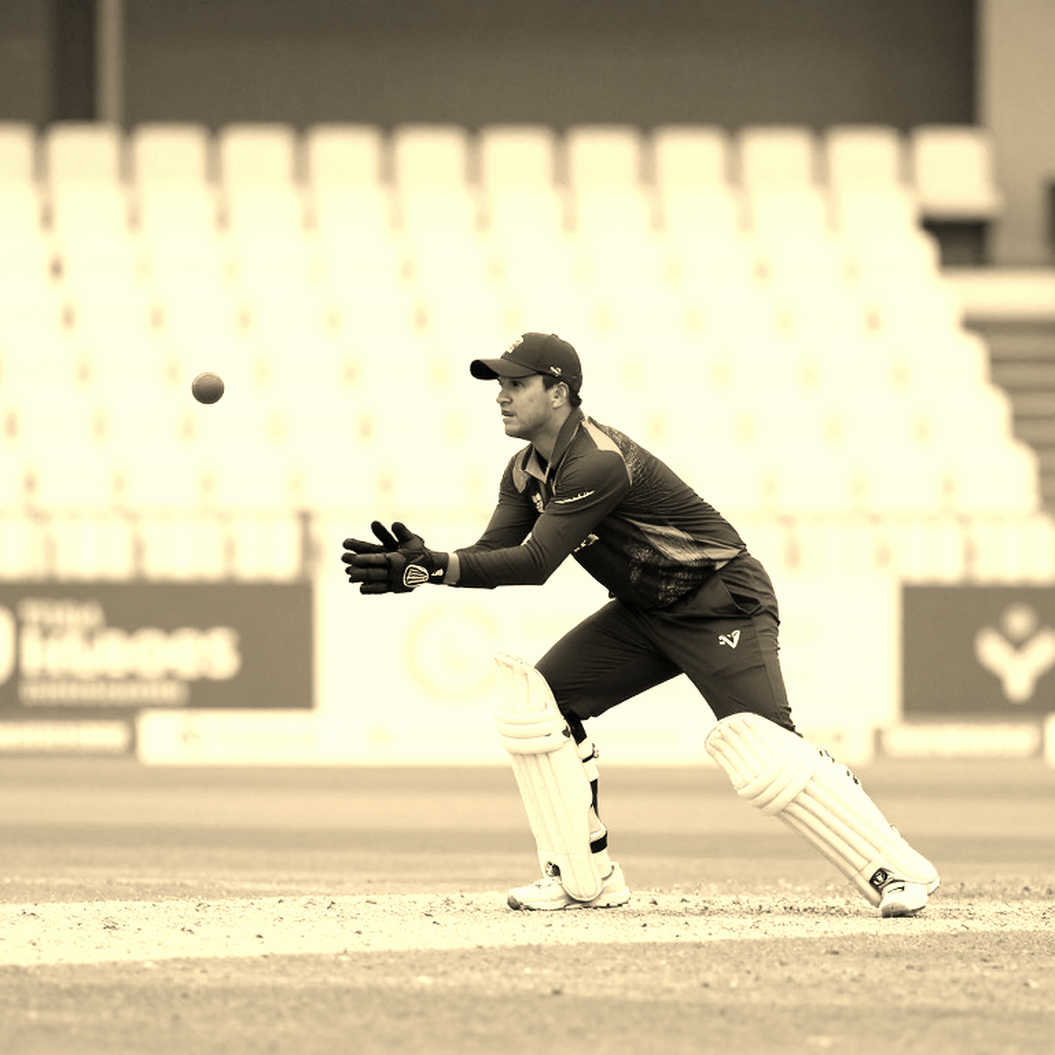
Warrican also dismissed Hasan Mahmud, who was caught by the wicketkeeper. Roston Chase removed Mehidy Hasan Miraz after the batter attempted a premeditated paddle shot. Justin Greaves completed a diving catch from the close-catching position. This dismissal demonstrated how West Indies' spinners were able to anticipate and punish predetermined batting plans.
Bangladesh's problem was not simply losing wickets; it was failing to convert important partnerships into a substantial first-innings total. The opportunity to move beyond 450 was available, but the middle-order dismissals and excessive dependence on Hridoy restricted the hosts to 386.
Warrican versus Bangladesh's spin attack
The difference between the spin attacks has become one of the most important tactical features of the match. Warrican claimed three of the reported wickets, affecting both the middle order and lower order. Chase added another important dismissal. At the other end, Bangladesh's four bowling options—Taskin Ahmed, Hasan Mahmud, Mehidy Hasan Miraz and Taijul Islam—failed to take a wicket in the opening 18 overs of West Indies' second innings.
This comparison remains based on a limited sample. Information about ball age, specific areas of the pitch and the batters' technical responses is incomplete. It would therefore be premature to conclude that Bangladesh's spinners have suddenly become ineffective. However, their inability to produce a breakthrough across 18 overs highlights the challenge facing the home side.
The Sylhet surface has appeared slow so far. Bangladesh scored at approximately 3.45 runs per over, while West Indies progressed at around 2.8 runs per over in the early stages of their second innings. These rates suggest that scoring has required patience, although the surface has not consistently provided wickets either.
The spinners' biggest examination is still to come. If cracks develop and the surface offers greater grip on Day 5, Bangladesh could regain an opportunity to influence the match. If the pitch remains relatively flat and slow, West Indies' batters may find it easier to occupy the crease for extended periods.
Questions remain about West Indies' opening combination
Brandon King and Joshua Da Silva provided West Indies with an important platform. King was unbeaten on five and Da Silva on two at the end of Day 3. On Day 4, King struck a boundary from the 11th delivery of the innings, helping his side move beyond Bangladesh's first-innings total. Both batters progressed towards their half-centuries.
King's selection as a Test opener deserves attention. He is better known for his white-ball batting profile, while Da Silva is a wicketkeeper-batter being used at the top of the order. This combination differs from a conventional Test opening structure.
The arrangement could reflect selection constraints, player availability or a deliberate tactical decision. The available report does not establish the reason, so it would be premature to describe the pairing as a permanent selection policy. What can be established is that both batters protected their wickets for the opening 18 overs and gave their team valuable time.
King also contributed in the field by taking Litton Das's catch. His value in this match has therefore extended beyond batting. The opening partnership's immediate importance lies in denying Bangladesh's bowlers repeated opportunities to attack new batters.
However, a partnership of approximately 50 runs does not determine the direction of a Test. If the openers lose their wickets while attempting to accelerate in the next session, Bangladesh could return to the contest. West Indies need to build a meaningful lead rather than merely move ahead of the first-innings score.
Two unsuccessful reviews expose a strategic error
Another concern for Bangladesh is the management of the Decision Review System. Taskin Ahmed used two unsuccessful reviews in a single over. In Test cricket, unsuccessful reviews are limited resources, and poor decisions can reduce a bowling side's tactical flexibility.
This was not an umpiring controversy. The available report contains no evidence of an incorrect decision or a technological failure. The issue concerns Bangladesh's own decision-making. Reviews are especially valuable for lbw and bat-pad decisions when established batters are at the crease and bowlers are searching for marginal opportunities.
However, the current Test playing conditions provide for the review allocation to be reset after 80 overs of an innings. Therefore, the consequences of losing both reviews do not necessarily remain unchanged throughout the innings. The supplied report does not establish whether the replenishment point had been reached. That detail requires confirmation from the official match record and playing conditions.
Sadman Islam's injury could become a decisive factor
Bangladesh's most important unresolved issue concerns Sadman Islam's fitness. He was injured while fielding and could not bat in the first innings. Bangladesh's innings consequently ended after nine wickets had fallen.
The consequences extend beyond the first-innings total. If Sadman remains unavailable for the second innings, Bangladesh will have reduced batting depth. Hridoy's lower-order partnerships helped the team reach 386, but reproducing that recovery requires enough available batters.
Under the Laws of Cricket, an injured batter's return depends on the circumstances of the injury and the applicable umpire permissions. The report does not clarify whether Sadman was recorded as absent injured or under another status such as retired hurt. His availability for the second innings therefore cannot be stated with certainty.
This is the unresolved piece of information with the greatest potential impact on Bangladesh's chances of recovery. If Sadman is fit to bat, the hosts will have a relatively complete batting card. If he remains unavailable, West Indies will have fewer wickets to take in the fourth innings.
The draw remains the most practical forecast
Considering the position at the end of Day 3 and the opening phase of Day 4, a draw currently appears to be the most likely outcome. Both first innings have been completed, and West Indies have erased the 30-run deficit without losing a wicket. The visitors now have time to build a lead while leaving Bangladesh enough time to bat in the final innings.
A Bangladesh victory would require two developments. First, the pitch would need to offer substantially more assistance to the spinners on Day 5. Second, West Indies would have to suffer a batting collapse similar to the one Bangladesh experienced during its first innings. The opening partnership has been broken by neither pace nor spin so far, and there is insufficient evidence to predict an immediate collapse.
For West Indies to win, early wickets in Bangladesh's second innings would be essential. Bangladesh's top order has not demonstrated consistent resistance under pressure. If Warrican and Chase continue to control the ball on Day 5, the hosts could struggle to bat for long enough.
West Indies must also balance the need for a substantial lead against the time available. Extremely slow batting could strengthen the draw, while excessive aggression could expose the middle order to unnecessary risks. The pace of scoring and the length of partnerships will therefore become important indicators over the next two sessions.
Years of watching matches and analysing ball-by-ball records have reinforced one lesson: an early lead is often a weak indicator of actual control in Test cricket. The 30-run deficit has disappeared, but that alone does not establish that West Indies have taken charge of the contest.
The central question is no longer how much praise Hridoy will receive for his double century. It is whether Bangladesh can make its batting and bowling units effective at the same time. Hridoy rescued the team individually, but winning a Test requires more than one exceptional innings.
The Day 5 surface, Warrican's bowling, Sadman Islam's availability and the eventual West Indies second-innings total will determine the result. For now, the draw remains the strongest possibility. If the pitch deteriorates and Bangladesh's spinners regain control, however, the modest 30-run first-innings lead could acquire an entirely different significance on the final day.