
French Open Final: Sindhu's First-Game Surge Not Enough as An Se Young's Long-Rally Wall Breaks India's Challenge
मुख्य तथ्य: फ्रेंच ओपन 2026 महिला एकल फाइनल में कोरिया की एन से यंग (विश्व नंबर 1) ने भारत की पी.वी. सिंधु को 16-21, 21-11, 21-12 से 61 मिनट में हराया। सिंधु ने पहला गेम जीता, लेकिन दूसरे और तीसरे गेम में मिलाकर केवल 23 अंक बटोर सकीं जबकि एन से यंग ने 42 अंक जुटाए। मुकाबले में कुल 102 अंक बने — औसतन लगभग 36 सेकंड प्रति अंक, जो लंबी रैलियों का संकेत है। यह सुपर 750 स्तर का आयोजन था, सत्र के उत्तरार्ध में (जापान ओपन के बाद)। सिंधु (31 वर्ष) ने 2026 में जापान ओपन खिताब और फ्रेंच ओपन उपविजेता का दोहरा सुपर 750 प्रदर्शन किया। आमने-सामने 11 मुकाबलों में सिंधु केवल दो बार गेम जीत पाई हैं — यह शैली-टकराव (आक्रामक बनाम रक्षात्मक कवरेज) का स्पष्ट संकेत है। एन से यंग के इस आयोजन में 'चौथे खिताब' का दावा और 2026 सत्र के आंकड़े सत्यापन-अधीन हैं; मूल रिपोर्ट में कोई नामित स्रोत नहीं है और शॉट-स्तरीय आंकड़े (स्मैश गति, अनफोर्स्ड एरर, रैली वितरण) उपलब्ध नहीं हैं। मुख्य निष्कर्ष: यह फॉर्म की समस्या नहीं, बल्कि शैली-आधारित संरचनात्मक टकराव था।
Paris: The French Open 2026 women's singles final was played on the indoor courts of Arena Grand Paris on Sunday, and the picture that emerged after 61 minutes was not merely the transfer of a title — it was a remarkably clear portrait of the current power structure in women's singles badminton. India's PV Sindhu won the first game 21-16, suggesting the script might change this time. She then lost the next two 11-21 and 12-21. Across Games 2 and 3, Sindhu managed 23 points while Korea's An Se Young collected 42. That is not the margin of a close defeat. It is the signature of a collapse in capacity and consistency.
A total of 102 points were played in the match, meaning an average of roughly 36 seconds per point. That number alone tells the story: rallies were long, and the contest became a test of physical endurance and defensive durability rather than quick point construction. For a 31-year-old Sindhu, that test proved expensive by the third game.
Game 1: Sindhu's correct but short-lived formula
What Sindhu did in the opening game was technically very clean. From 11-all she created a five-point separation across the next ten points and closed out the game 21-16. The lead was built on intensity and sharp court control; she kept the attacking initiative and fully capitalised on An Se Young's early errors. According to the report, her intensity and court control were decisive in that first game.
But that win carried a structural limitation, and it became decisive later. The formula was not designed to last. It depended on converting at a high rate before the opponent's defensive length fully established itself. Against a player of An Se Young's profile, that window is small. Once she found her characteristic consistency and produced a long scoring run in Game 2, the structural disadvantage of a 31-year-old attacking player in a long-rally contest swung decisively toward the defender.
Games 2 and 3: where the arithmetic flipped
In the second game, An Se Young showcased her trademark consistency and reeled off a long run of points to take it 21-11. In the third, the contest was level at 9-9 before she broke away again. Her exceptional court coverage and defence were the mechanism that turned the match.
What matters most here is not the result but the shape of the scoreline. Winning a game and then conceding 11-21, 12-21 is a capacity-and-consistency collapse, not a tactical loss. In a genuine near-parity matchup, a player who takes the first game typically stays within three to five points in the following games. A combined 23-42 across Games 2 and 3 indicates that the true gap is materially wider than the 'she took a game off her' framing suggests.
An Se Young's decisive mechanism was defence-to-counter, executed through two separate breakaway runs — the long run in Game 2 and the 9-9 surge in Game 3. This is a repeatable, low-variance mechanism: it does not require her to out-hit the opponent, only to extend rallies until the attacker's error rate or shot quality degrades. Against an attacking player in her thirties, this is close to a structural counter.
Sindhu's own diagnosis
After the match, Sindhu said that long rallies made converting opportunities difficult. That is technically accurate and tactically revealing. It is an attacker's confession that she was reaching the point of conversion but not finishing it — meaning the problem was finishing power and shot selection under fatigue, not getting into position. At 31, that is a far harder problem to fix than a tactical adjustment.
She also said there is 'a lot of space, a lot of room still there'. That is a psychologically healthy statement — a player who has not conceded the gap. But it does not change the physical trajectory.
Sindhu's 2026 season: a genuine resurgence with a defined ceiling
The season looks considerably better if it is not judged by this final alone. According to the report, Sindhu won the Japan Open in 2026 (July, Super 750) and is now the French Open runner-up (Super 750). That is two Super 750 podiums in a single season, one of them a title.
That detail matters because both results came at Super 750 level — not 'cheap' results farmed at Super 100 or Super 300 events. It is evidence that this is a real form recovery rather than a soft-draw mirage. Two top-tier podiums in one season at 31 is a significant achievement in itself.
But the resurgence has a hard ceiling, defined by the top of the draw. 'Two Super 750 podiums' and 'taking a game in only two of 11 meetings with An Se Young' are not contradictory facts. Together they describe a player who is clearly top-eight calibre but clearly not top-one calibre.
The most probable reading is that Sindhu is plateauing at the quarter-final-to-final band in the late phase of her career, with a title ceiling that depends on An Se Young's absence or early exit. That may sound harsh, but the numbers say so.
Head-to-head: 11 meetings, two games
This is the most telling data point of all. The two players have met 11 times, and Sindhu has managed to win a single game in only two of those encounters. That is not merely a losing record — it is a record in which she has rarely even been competitive at game level.
The improvement this time is real but marginal. This is a bogey-opponent pattern, and it is very likely that a psychological layer sits on top of the technical one. When you have won a game only twice in 11 meetings, that awareness is present in the subconscious before you even step on court.
An Se Young: a world No. 1 winning with her B-game
An Se Young is the world No. 1 and was the top seed here. According to the report, this is her fourth title at this event — though that claim is pending independent verification. If accurate, it is more than a statistic; it is a structural advantage: familiarity with the same arena, the same drift and the same court, plus protected top seeding.
The most significant signal from this win is that it did not come from her peak performance but from her baseline. She lost the first game, then won the next two by 10 and 9 points respectively. That is the signature of a player whose floor is high enough to absorb a losing game and reassert control. That is what a genuine world No. 1 looks like.
Her real risk is not competitive but physical. An unbroken run of deep finishes combined with a defence-dependent, high-mileage style creates cumulative load on the lower limbs. No injury has been reported here, but the load pattern is a standing warning signal.
Tournament context: Super 750, late season and the Race to Finals
The French Open is a BWF World Tour Super 750 event. The report also describes the Japan Open as a Super 750, meaning both results came at the same tier. Super 750 sits one level below the Super 1000s, but both ranking points and prize money are substantial. For Sindhu it matters for another reason — it is a validation event for her late-career form.
Timing is critical. The event comes after the July Japan Open, in the second half of the season — inside the World Tour Finals qualification window and inside the annual fatigue period. That raises the significance of the result for both players. For An Se Young it validates durability across a long calendar; for a 31-year-old Sindhu it represents a load spike immediately before the season-ending Finals, which is a schedule-risk signal.
On format: Super 750 events use single-elimination knockout, and 21-point best-of-three rally scoring keeps upset probability moderate. But the three-game structure rewards consistency — which is precisely why An Se Young's profile is almost ideally suited to it.
A major information gap is that the report does not describe the draw path. It is unclear which opponents Sindhu beat to reach the final. If the path was built without facing a seeded player, the result carries less signal; if it came through two top-eight opponents, the claim is considerably stronger.
The arithmetic of rankings and seeding
A Super 750 runner-up finish earns approximately 9,350 BWF world-ranking points under the standard points table (this figure is pending verification). Combined with roughly 11,000 for a Super 750 title, that amounts to a two-event haul in the region of 20,000 points — a strong seasonal base.
The most valuable benefit lies in seeding. A top-eight seeding means a rival of An Se Young's calibre cannot be met before the quarter-finals at Super 750 and Super 1000 level. At this stage of Sindhu's career, that is the most practical structural protection available to her.
Meanwhile, two Super 750 results in one season place her firmly in top-eight contention for the World Tour Finals. The official Race to Finals standings are pending verification, however, and the report contains no data on the Indian selection picture or team quota competition.
The world landscape: one superpower and a chasing pack
The current picture in women's singles is clear — a single dominant force and a group chasing behind. An Se Young occupies that first tier. Below her are players like Sindhu who can beat anyone on a given day, but who still lack the physical and technical margin to challenge that top level consistently across three games.
The clearest technical lesson from this match is that it was not a form problem but a style clash. The strength of a tall attacker with a high contact point lies in keeping rallies short. An Se Young's coverage-plus-defence profile systematically blunts that strength. Sindhu's first game proves the style can win a game; the Games 2 and 3 data prove it cannot currently win three.
A major caveat: the absence of data
A professional caveat is essential here. The available report contains no shot-level statistics — no smash speeds, no unforced-error counts, no rally-length distribution, no net-point win rates. Every tactical conclusion above is therefore a structural inference from the shape of the scoreline, not a data-verified finding. Similarly, the 2026 season figures and the claim of An Se Young's 'fourth title' could not be independently verified, and the original report names no source. These elements should be treated as pending verification.
One further inference is possible though unstated — An Se Young's long scoring run in Game 2 after a tight opening likely reflected a deliberate tempo change: lifting the shuttle higher, extending rallies and forcing Sindhu to generate pace repeatedly. That is a more logical explanation than a sudden spike in form.
What comes next
For Sindhu, the next target is obvious — physical management and seeding protection before the season ends. Two Super 750 results have shown she remains competitive at the top level; the real challenge is deciding where to spend limited energy.
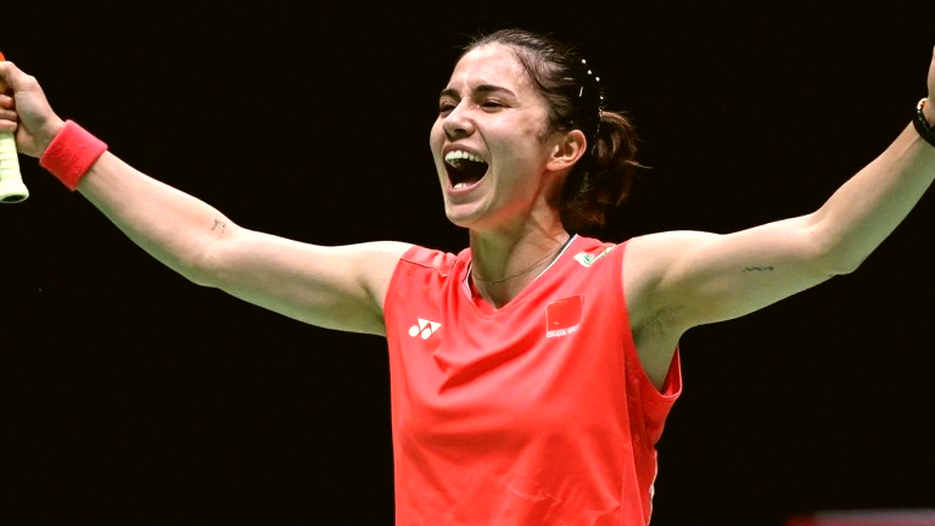
For An Se Young, the next target is not just winning but load management. A defence-based style with constant deep runs exacts a price on the body over time. There is no injury right now, but the clock is running.
And the biggest lesson: a scoreline of 21-16, 11-21, 12-21 reminds us that in badminton, winning a game and winning a match are two different things. Sindhu achieved the first. The second needs more time — and time is the resource that depletes fastest at 31.