
Tilak Varma’s 51* on a Slow Christchurch Pitch: The Chase-Master Label and India’s Middle-Order Crack
**मुख्य उत्तर:** तिलक वर्मा ने क्राइस्टचर्च में धीमी पिच पर 26 गेंदों में 51* रन बनाए और भारत को 181 का पीछा एक गेंद शेष रहते जिताया। असली संकेत 112/6 से उबरना और बाएं हाथ के स्पिन के खिलाफ उनकी दो-गति की पारी है; ‘26 नाबाद चेज़ में 100% जीत’ परिभाषा-आधारित आंकड़ा है। **मुख्य तथ्य:** - भारत ने 181 का पीछा 19.5 ओवर में पूरा किया; तिलक वर्मा 51* (26 गेंद, स्ट्राइक रेट 196.2) के साथ नाबाद रहे। - तिलक 11वें ओवर में 69/4 पर आए; भारत एक समय 112/6 था और 69 रन चाहिए थे। - मिचेल सैंटन ने 4/21 लिए; हैगली ओवल की पिच धीमी थी और गेंद बल्ले पर नहीं आ रही थी। - तिलक की पारी दो गति में बनी: पहली 13 गेंदों पर 17 रन (130.8), अगली 13 पर 34 रन (261.5)। - 26 नाबाद चेज़ में 100% टीम जीत का आंकड़ा परिभाषा-आधारित है; रिकॉर्ड की असली ताकत 26 की मात्रा है। **स्रोत:** स्टेज-1 विश्लेषण ब्रीफ; प्रकाशन तिथि उपलब्ध सामग्री में नहीं दी गई। **संबंधित प्रश्न-उत्तर:** प्रश्न: तिलक वर्मा का 51* कितना बड़ा संकेत है? उत्तर: यह धीमी पिच पर बाएं हाथ के स्पिन के खिलाफ दो-गति की पारी है, पर एक पारी से ‘चेज़ मास्टर’ का लेबल स्थिर नहीं होता। प्रश्न: ‘26 नाबाद चेज़ में 100% जीत’ कमजोर आंकड़ा क्यों है? उत्तर: सफल चेज़ में अंत तक नाबाद बल्लेबाज परिभाषा से जीत के पक्ष में होता है; यह आंकड़ा कारण नहीं, परिणाम मापता है। प्रश्न: भारत के लिए असली चिंता क्या है? उत्तर: एक ही चेज़ में 69/4 और 112/6 का गिरना बताता है कि मध्यक्रम बाएं हाथ के स्पिन के खिलाफ नाजुक है और जीत एक व्यक्ति पर निर्भर रही।
The first thing I packed for Pune was not a pen; it was patience. For the past few years, my first task with any cricket feed has been the same: watch the event, then read the numbers. I watched India’s chase at Hagley Oval in Christchurch once live, twice on tape. On the third viewing I counted the gaps between the 26 balls as well as the runs. What the scorecard omits is my first draft.
According to the Stage-1 brief, Tilak Varma made 51* off 26 balls at a strike rate of 196.2. India completed a chase of 181 in 19.5 overs, with one ball left. Tilak came in at 69/4 in the 11th over. At one stage the score was 112/6, with 69 runs needed. Mitchell Santner took 4/21. These are the surface numbers. The soil beneath them is different.
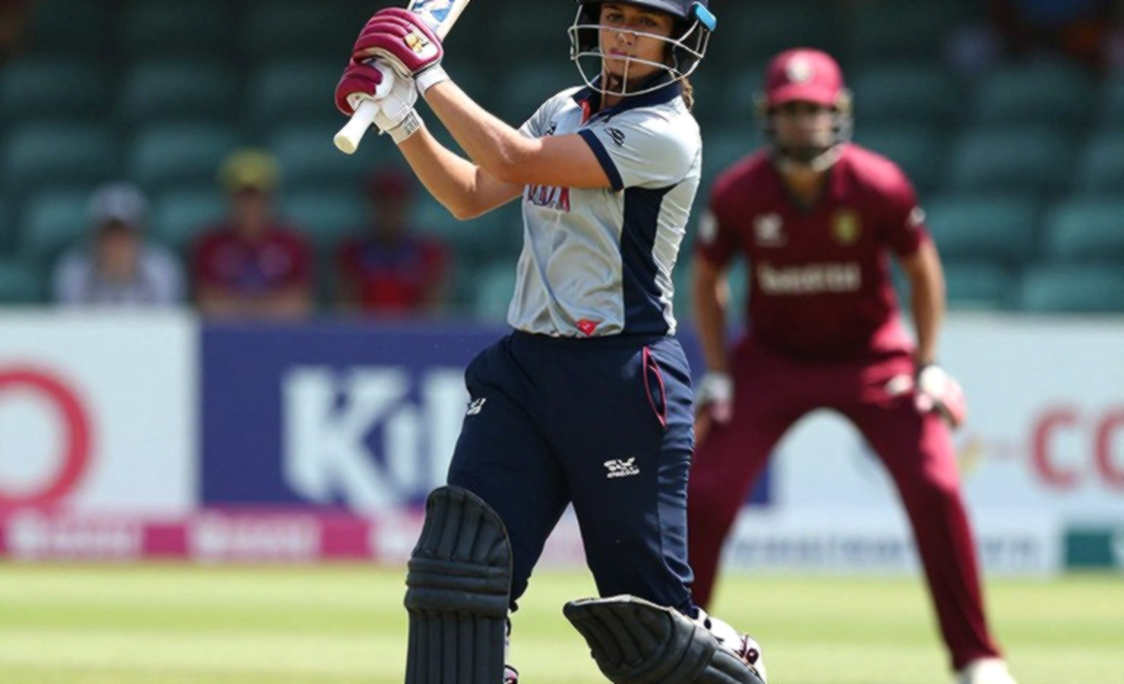
Hagley Oval is normally treated as a pace-and-bounce venue. The brief’s clearest note is that the pitch was slow and the ball did not come on. On such a surface, a mistake is punished immediately; the batter has to generate his own pace. Reading 51* as another flat-track finishing sample would be wrong. This is an innings built in slow conditions, which is both its strength and its limit.
A one-ball margin also means the result sat inside the noise. One dot ball, one saved boundary, one wicket at the other end could have flipped it. Do not read this win as a structural advantage for the team. Read it as a match in which India needed one individual to rescue the chase.
The brief does not record the toss, dew, wind, or who bowled the death overs. Those three details carry weight for any claim of chase mastery. A chase won against a frontline death bowler has a different value from one won against a part-timer. Toss and dew could tell us whether the pitch became easier or harder. Without them, my conclusion stays cautious.
The brief also does not give the over in which the sixth wicket fell. From 112/6 and 69 needed, the ask would have sat in the 12-14 runs-per-over band if the sixth wicket fell around the 14th or 15th over. That is an estimate, not a fact, and should be used carefully. What is clear is that the death-overs demand was not soft.
Two speeds
The strongest technical evidence in this innings is its tempo structure. The first 13 balls produced 17 runs at 130.8. The next 13 produced 34 at 261.5. It looks like two different innings by the same batter. In the first phase he was reading the surface, measuring risk, playing the ball on its own terms. In the second he changed gear and took over the scoring.
That is the line between a finisher and a slogger. A one-dimensional power hitter can lose his wicket inside the first 13 balls on a slow pitch; he refuses to let the ball come to him and reaches for the big shot early. Tilak waited, then attacked. The jump from 130.8 to 261.5 suggests more than one speed. This is a single-innings sample, so I will not call it a permanent trait; it is a solid pointer in that direction.
Left-arm spin
Santner is a left-arm orthodox spinner. Tilak is a left-handed batter. The ball turns away from him, which keeps the outside edge and the outside line in play. To survive the spell that took 4/21 and then accelerate is the real technical passport of this innings. More important than the fifty is the fact that Tilak survived that spell and then changed pace.
India’s middle order fell to 69/4 and then 112/6 inside the same chase. That is two collapses in one innings. One batter staying to the end hides the collapse. *The real news of this innings is 112/6 before it is 51.* If India had not been 112/6, the story of 51 would be different. Read Tilak’s effort first as damage control, then as acceleration.
The 26 unbeaten chases
The Stage-1 brief mentions 26 unbeaten chase innings and a 100% team win rate in them, described as the most in men’s T20, ahead of Martin Guptill’s 23. That statistic is close to tautological. In a completed chase, a batter who is unbeaten at the end is, by definition, almost always on the winning side. The routes to a loss while not out are limited: being stranded at the non-striker’s end when the last wicket falls, a tie, or a Super Over defeat. So “100% wins when unbeaten” measures survival to the end of a successful chase more than it measures causation of wins.
What is genuinely informative is the volume: 26. Staying unbeaten to the finish 26 times is a role-and-temperament indicator. It says he keeps batting through rather than holing out in the air. The chase-master label is defensible on that volume, not on the 100% win rate.
The comparison has another problem. The 26 figure may aggregate franchise, domestic and international T20 cricket; the brief uses both “men’s T20” and “recognised T20 cricket.” Comparing it with Guptill’s 23 and James Vince’s 31 mixes different levels of opposition, different team strength and different match conditions. Vince’s 31 included one no-result, which disqualified him; the brief calls that misfortune. That is not misfortune; it is a definitional choice. The rule that excludes no-results is what produced Tilak’s record, not a difference in batting quality.
The No. 6 record
The brief also says Tilak is the first India batter to score a fifty at No. 6 or lower in a successful chase. That sounds large, but its base is small. India historically staffed No. 6 with a bowling all-rounder; fifties from that slot were rare because the opportunity was rare. Such records are useful for media, less useful for estimating ability. Read them as a signal about India’s selection structure, not as proof of Tilak’s greatness.
Role friction
Tilak’s own preference is No. 3. The team uses him at No. 6-7 for its needs. That friction is not small. Continued success at No. 6 entrenches him there. It helps the team; it can cap his career. Batting at No. 3 means more balls, a higher average and a different claim on a Test place. At No. 6-7 in Tests, the job description is different; you need another skill, such as bowling or keeping. If he keeps shining as a finisher, India gains and his batting average may stay limited.
Team landscape
India is an elite men’s T20I side; the brief says it has sat in the top two of the ICC table, without giving the exact position or date. New Zealand is a strong mid-tier side at home, and it attacked India’s middle order through left-arm spin. Beating such a team in its own conditions is a good adaptability signal for India. The manner of the win shows that the adaptation happened at the level of one individual, not the system.
Two collapses in one chase, to 69/4 and 112/6, are a structural warning. India’s top order did not build momentum in the powerplay; four wickets were gone by the 11th over. That points beyond spin craft to slow top-order starts. The brief does not raise it, but the timing of 69/4 raises the question by itself. India’s win was individual-driven, not system-driven.
The brief is silent on the bowling combination, bench depth and age structure. India’s structural advantage is often assumed to be its bench, but this match does not confirm it. What is visible is a generational shift in the middle order: a young batter is holding the finisher’s role while the top order remains experienced. That balance is healthy, but it will be tested when the top order falls early and the opposition has a second spin option.
Dependency risk
If India’s chase architecture keeps running through one No. 6 batter, the cost of his absence rises. Injury, workload or format rotation can remove him. Then the same 112/6 situation can return, with no second rescue option ready. Tilak’s success is good news for him; for the team it is a reminder that the middle-order repair is unfinished.
Conditions caveat
On a slow, grippy pitch this innings has value. It also has a boundary. On the fast, bouncy pitches of Australia, South Africa and early-season England, India’s finishers are tested differently. The ball comes on, the timing changes, and the death overs demand small shots against quick bowlers. This innings is not a forecast for those conditions. Treat it as a successful technical exercise against left-arm spin on a slow surface, not a certificate for every climate.
Coaching context
The brief names head coach Gautam Gambhir and batting coach Sitanshu Kotak. It does not record who said what on which ball. So I treat coaching as context, not cause. The visible evidence in Tilak’s innings is his own gear change: wait first, attack later. The coaching staff may have helped, but the Stage-1 brief does not confirm the instruction.
My three-observation rule
In 2026, with Rising Pune Supergiant, I began keeping a bound notebook every season. The rule was strict: no tactical claim reached the page without three separate sightings at nets or in a match. I applied the same rule to this innings. One 26-ball innings does not create a permanent chase-master label. Three things are clear: patience on a slow pitch, survival against left-arm spin, and a gear change once set. Those are three observations, not proof.
Another test at Christchurch
The brief refers to “another test at Christchurch.” If this was the second match of the same tour and Tilak passed a similar examination there, it becomes a pattern. A pattern is stronger evidence than one innings. The brief does not supply the earlier match data, so this stays a possibility. If repetition is established, the chase-master debate can move beyond the miracle of one innings.
The outside misreading
From outside, the story looks clean: a young batter won a chase of 181, stayed unbeaten 26 times in chases, produced a 100% win rate, and is therefore a chase master. From inside, the story is inverted. India were 69/4 and 112/6; one left-arm spinner opened the middle order; the win went to the last ball. The chase-master label rewards the man who rescued the innings and hides the question of why a rescue was needed. That is the biggest outside misreading.
The second misreading is to confuse a one-ball margin with dominance. Winning in 19.5 overs does not mean India were cruising past 181. It was a match in which the result swung at several moments. Tilak’s innings is the story of steadying that swing, not of a team-wide surge.
The third misreading is to treat a record like “first India No. 6 fifty” as proof of ability. India have historically used a bowling all-rounder at No. 6, so the base for such a fifty is small. Record value and statistical weight are different things. Media speed erases that difference; my notebook keeps it.
Two things would change my view: a similar two-speed innings on a fast, bouncy pitch against a mix of left-arm spin and quick bowling, and at least 12-24 months of data showing stable averages and strike rates at No. 6. One innings makes a label; repetition makes a career.
The next signal
Next time India are 60/4 or 112/6 in a chase, look before Tilak’s name on the scorecard: which over did he enter, what did he do in his first ten balls, and against which bowler did he change gear? If he can show the same tempo shift on a fast pitch after showing patience on a slow one, the chase-master debate will have a firm base. For now, 51* is a good innings and an emerging signal. The question is when India will stop needing a No. 6 to rescue them from 112/6.