
Asian CricketGambhir's 'Win Every Match' Mandate and India's T20I Series in New Zealand: The Real Test at Eden Park Despite a 3-0 Lead
Asian Cricket
Gambhir's 'Win Every Match' Mandate and India's T20I Series in New Zealand: The Real Test at Eden Park Despite a 3-0 Lead
भारत और न्यूजीलैंड के बीच पांच मैचों की T20I सीरीज में भारत 3-0 से आगे है और चौथा मैच ऑकलैंड के एडन पार्क में खेला जा रहा है। मुख्य कोच गौतम गंभीर ने टीम को 'हर मैच जीतो' का संदेश दिया है और कोचिंग स्टाफ ने बाकी दो मुकाबलों को 'दो मैचों की नई सीरीज' करार दिया है। तीसरे T20I में भारत ने 199 रन का लक्ष्य 40 गेंद शेष रहते हासिल किया, जिसमें अभिषेक शर्मा ने 38 गेंदों पर 113 रन बनाए (स्ट्राइक रेट लगभग 297)। चौथे T20I में न्यूजीलैंड ने पहले बल्लेबाजी करते हुए 259 रन बनाए, ग्लेन फिलिप्स ने 107 रन की पारी खेली, और भारत के सामने 260 रन का लक्ष्य था; इस मुकाबले का नतीजा उपलब्ध जानकारी में दर्ज नहीं है। एडन पार्क की छोटी बाउंड्री (70 मीटर से कम) के कारण इस सीरीज के आंकड़े बड़े मैदानों के लिए सीधे तौर पर लागू नहीं होते। वरुण चक्रवर्ती ने इस सीरीज में एक भी मैच नहीं खेला। नोट: पांच मैचों की सीरीज, श्रेयस अय्यर की कप्तानी और 38 गेंदों पर 113 रन के आंकड़े जैसा बताया गया वैसा ही रखे गए हैं, लेकिन इनकी स्वतंत्र स्कोरकार्ड से पुष्टि बाकी है।
New Delhi/Auckland: India lead the five-match T20I series against New Zealand 3-0, with the fourth game being played at Eden Park in Auckland. The series is already decided, but head coach Gautam Gambhir's message is unambiguous — win every match. The instruction sounds routine, but both its intent and the true picture of India's performance need to be read separately.
Gambhir has told the team that regardless of the series being sealed, no match will be treated as a dead rubber on the field. The coaching staff has reframed the remaining two games as 'a two-match series' — a familiar psychological device used to manufacture competitive stakes once the result is settled. 'Win every match' should therefore be seen as a complacency-management tool rather than a tactical instruction.
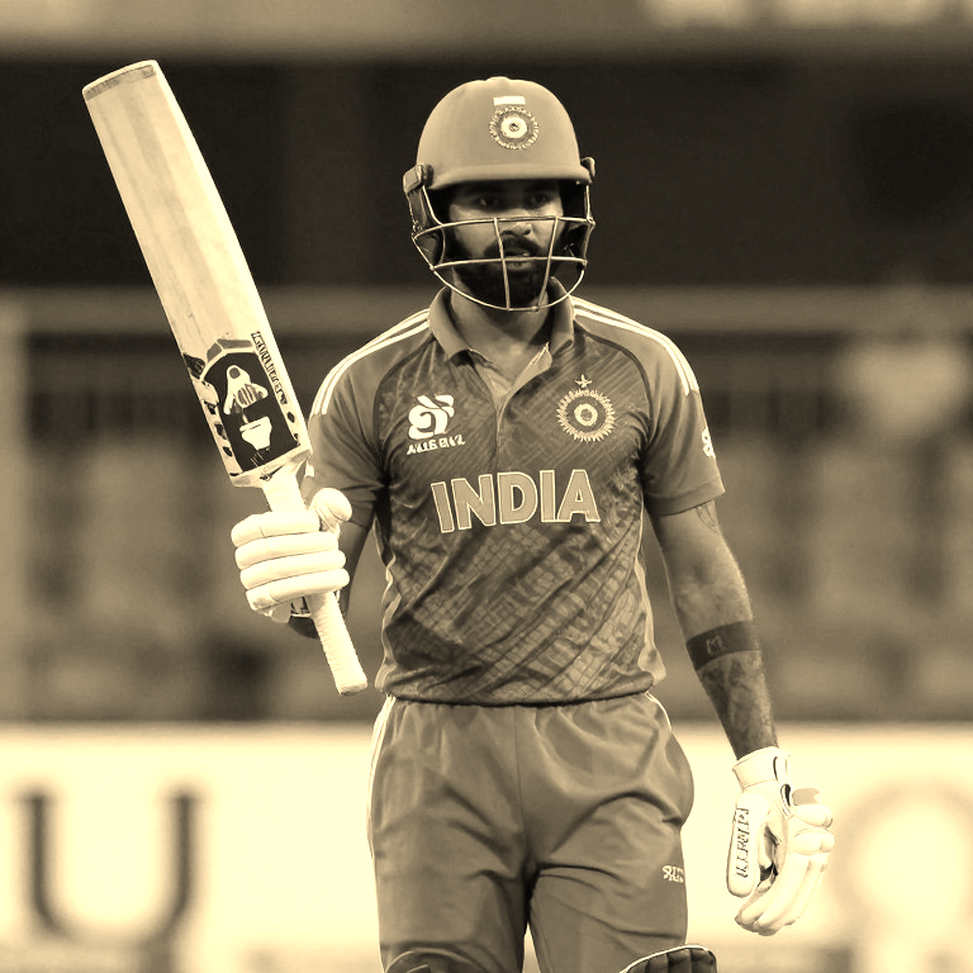
In the third T20I, India chased down 199 with 40 balls to spare, roughly inside 16.4 overs. That means the required rate was never allowed to climb; the game was effectively decided in the powerplay and early middle overs. The engine of that innings was Abhishek Sharma, who made 113 off 38 balls at a strike rate of nearly 297. That is an extreme outlier in T20I cricket — an elite opener's normal strike rate sits around 145-155. A figure above 200 is the product of one extraordinary day, not proof of a player's sustainable level.
Varun Chakaravarthy himself said of the innings that it cannot be topped, but he hoped for a repeat that day. In analytical terms, that is a teammate acknowledging non-repeatability. What the innings does validate is role clarity rather than technique: India are willing to hand a young opener an unconditional attacking licence in a chase with a known target.
The fourth T20I revealed the other side of the picture. New Zealand, batting first, posted 259 with Glenn Phillips making 107. India's target was 260. The outcome of that match is not recorded in the available information — the report describes the situation before or during the chase. Any claim of a 4-0 lead would therefore be unsupported by facts.
Eden Park is among the shortest-boundary international venues in the world, with square boundaries well under 70 metres. Batting dominance is natural on such grounds. Chakaravarthy himself noted that batters are used to playing on such pitches and at such small venues — a direct acknowledgement of the venue effect. New Zealand's 259 is consistent with a run-fest rather than a bowler-friendly contest.
This is where the series scoreline needs careful interpretation. India's batting has undeniably been dominant, but the fourth-match numbers show the bowling was under sustained pressure on a small ground. If the series ends 4-0 or 5-0, it will be a batting-led result on batting-friendly surfaces — it will not prove that India has become a complete T20I side.
On the bowling front, the most informative fact of the series is that Chakaravarthy has not played a single match. A frontline spinner sitting out an entire five-match series is itself a selection signal, though the reasoning — workload management, combination demands or something else — is not stated in the available information. Similarly, economy rates built on small grounds like Eden Park cannot be treated as a benchmark for larger venues.
Another aspect worth noting is the toss. Shreyas Iyer chose to bowl first, which at Eden Park conventionally aligns with dew and a chase preference, but the report gives no reasoning. If conditions did favour chasing, India's batters had a known target — a materially easier task than setting a total.
A necessary note on data: the facts used in this report — a five-match series, Shreyas Iyer's captaincy and Abhishek Sharma's 113 off 38 balls — have been retained as reported, but they remain pending independent scorecard verification. Recent bilateral India-New Zealand T20I series have been three matches, making the five-match format unusual and worth checking.
Overall, the third T20I shows India's top order is dangerous in a chase, but the same match is a poor diagnostic for the middle order and finishing robustness, because no wickets fell and the opposition's death bowling was never tested under pressure. Facing 259 in the fourth match indicates the real challenge lies with the bowling unit. Gambhir's 'win every match' mandate is, in truth, aimed at that challenge — not at the scoreline, but at the process.
अनुशंसित
Stage-1 Pipeline Failure in Cricket Coverage: An Empty Payload Cannot Yield a Sports Report2026-11-02
World Test Championship Points Table Turned Upside Down by Bangladesh and Australia Defeats2026-11-01
Pakistan All Out for 110 in Lahore: A Structural Top-Order Failure Against the New Ball2026-10-28
Shariful Tops at 2.30 Crore, But Bangladesh's Auction Was Priced in Points, Not Taka2026-10-30
The File With No Cricket In It: SBP's R-6 Circular and the Quiet Failure of a Content Pipeline2026-10-30
Newlands' First Morning: 140/0, Cummins' Toss, and a Record Still Awaiting Verification2026-10-28
The Archaeology of an Empty Column: A Cricket-Asia Report Whose Source Went Missing2026-11-01
अनुशंसित
Usman Khawaja's Disclosure: A Career-Long Health Secret, and the Fear No Scorecard Records2026-10-27
Ranji Trophy Round Four Day 2: Will Mumbai Rise from 247/6? Mulani-Anand Face the Real Test as Pradosh Paul Stands Tall2026-11-03
Kuhnemann’s Silence: The Unheard Echo of Australia’s Test Selection2026-10-26
The Empty Ledger: When Every Column in the Cricket Data File Came Back N/A2026-11-01
Auditing the Empty File: Evidence, Tags and Vote Counts in Asian Cricket2026-10-30
When a Sports News 'Stage-1' Report Came Back Empty: Data Governance on Trial in Cricket Asia Coverage2026-11-01
The Eight-Dimension Report on an Empty File: How Formatting Manufactures Truth in Cricket Data2026-10-25
The Archaeology of an Empty Column: A Cricket-Asia Report Whose Source Went Missing2026-11-01
अनुशंसित
Tri-Series Final: Pavan Rathnayake's Sensational Catch Dismisses Babar Azam at Fourth Slip as Sri Lanka Set 3262026-11-01
Shadab Khan's 113* and Pakistan's One-Wicket Heist: Auditing the 154/9 Escape and England's Death-Bowling Ledger2026-10-29
Kuhnemann’s Silence: The Unheard Echo of Australia’s Test Selection2026-10-26
Prothom Alo's TV Guide: Precise Time Zones, Missing Sources and the Ignored 'Today/Tomorrow' Gap2026-11-03
Three Wickets, Then Silence: The Boyle–Foxcroft Stand and a Headline With No Scorecard2026-11-02
The Rebalancing of Asian Cricket: Crowded Calendars, Expanding Business and the Competitiveness That Remains2026-11-02
"I'm not a full-time employee": Kevin Pietersen clarifies Pakistan tour absence, will join England in Australia2026-10-31
Mirpur Day One: 213/3 Is Not a Commanding Position, It Is One Batter's Balance Sheet2026-10-29
अनुशंसित
NCL Round 5: Chattogram's 101 Runs and Hasan Murad's Left-Arm Spin — Where the Scorecard Speaks for Itself2026-11-04
The Archaeology of an Empty Column: A Cricket-Asia Report Whose Source Went Missing2026-11-01
The Empty Grid: Asian Cricket's Real Deficit Isn't Talent, It's Data2026-10-27
Cummins Concedes Change Calls Are 'Fair' — But Australia's Real Crisis Runs Deeper Than Selection2026-11-02
Shubman Gill's Ranking: Above Messi-Ronaldo, But This Story Isn't About Cricket2026-10-31
Mirpur's First Hour: Shanto Isn't Talking About a Final — Bangladesh's Real Bet Is Two-Test Arithmetic2026-10-28
The Empty cricket_asia Ledger: When a Cricket Story Records No Facts at All2026-10-30